Winners of the First Call for Best Practices
The first Call for Best Practices in New European Bauhaus in the Northern Periphery and Arctic Region was launched and closed in December 2025. The Call aimed to identify practices and solutions in the NPA Region that align with NEB values and circularity. Seven projects from Iceland, Sweden, Norway, and Ireland are honoured as winners and runner-ups of the Call in three categories: circular society, circular instruments and circular buildings.
First Call Winners
The first Call for Best Practices in New European Bauhaus in the Northern Periphery and Arctic Region was launched and closed in December 2025. The Call aimed to identify practices and solutions in the NPA Region that align with NEB values and circularity. Seven projects from Iceland, Sweden, Norway, and Ireland are honoured as winners and runner-ups of the Call in three categories: circular society, circular instruments and circular buildings.
Seven partners from the NPA Region* joined forces to contribute to a more sustainable, beautiful, and inclusive built environment in the region's remote and sparsely populated communities. The project, called Bauhaus Goes North (BGN), received funding from the Interreg NPA Programme, co-funded by the European Union.
The BGN project aims to utilise the concept of the New European Bauhaus (NEB), an initiative that combines three dimensions of a supportive built environment: sustainability, aesthetics, and inclusion. However, the BGN project's primary focus is on practices linked to circularity and resource efficiency, while also providing a high-quality experience for built-environment users and promoting inclusiveness.
To identify practices and solutions in the NPA Region that align with NEB values and circularity, and to accelerate their take-up throughout the region, the BGN project partners launched the first Call for Best Practices in New European Bauhaus in the Northern Periphery and Arctic Region. Practices looked for were activities (e.g., building design, neighbourhood plan, technological solution) or a policy or operational instruments (e.g., concept, local roadmap, procedure, toolbox) facilitating circular construction in three priorities (categories):
-
Circular society.
-
Circular instruments.
-
Circular building.
The winners and runner-ups of the call all demonstrate innovative, transformative approaches that facilitate circular construction. They all contribute to making the Northern and Arctic Region more circular, beautiful, and inclusive, and therefore align with the NEB values and principles.
Below you will find the Expert Panel’s conclusions on the winners and runner-ups in the three categories.
Circular Society
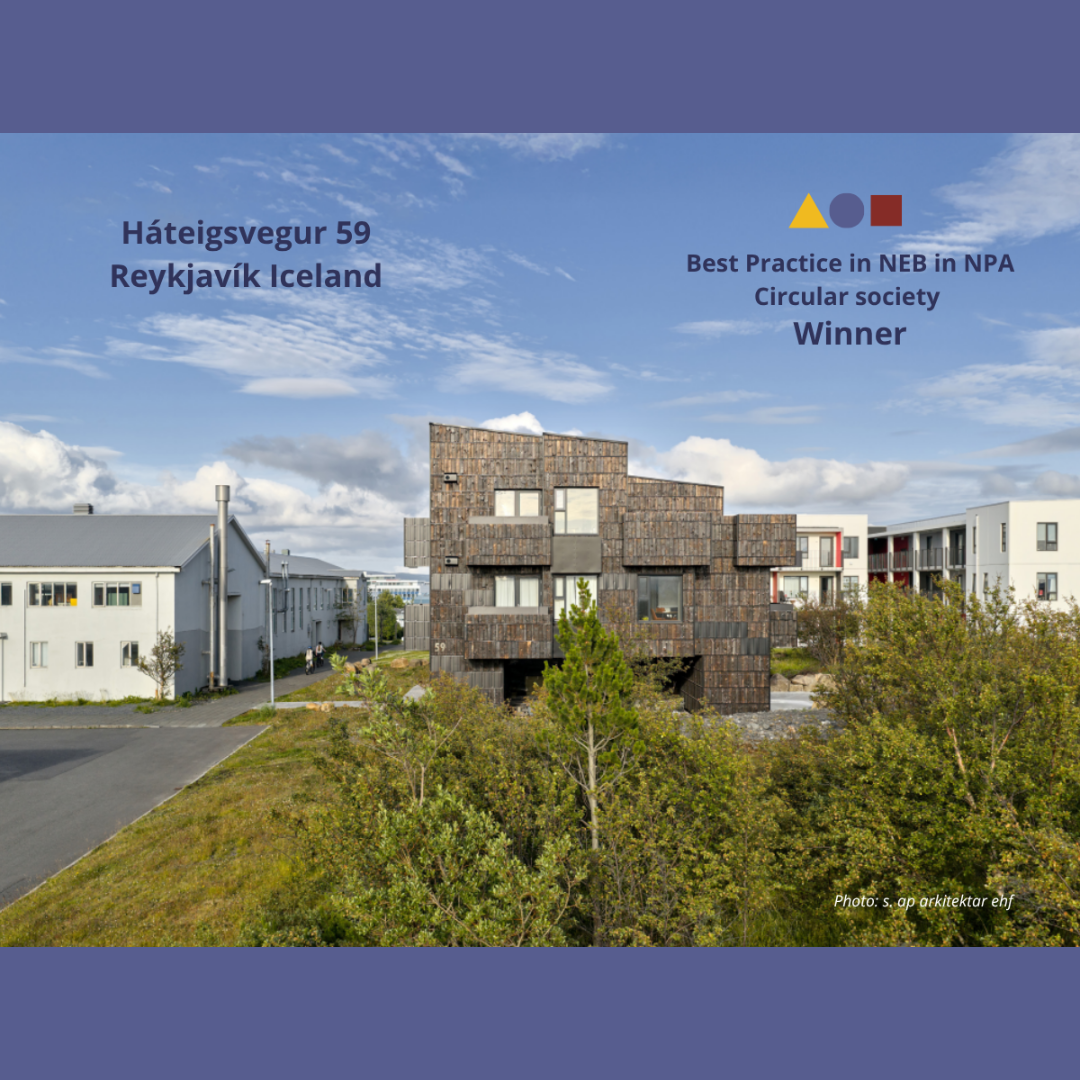
Winner: Háteigsvegur 59 (H59) - Reykjavík, Iceland H59, a social housing project, is a 500-square-meter residential complex providing the first independent homes for young people with disabilities. The initiative integrates environmental responsibility, social inclusion, and high-quality architectural design into a single, coherent practice. Through the reuse and use of low-carbon materials, the project considerably reduced whole-life carbon emissions. By balancing functional clarity with spatial generosity, light, and tactile surfaces, the project offers residents a dignified and enriching environment. Engagement with residents and caregivers ensured the facility meets genuine needs, while consistent communication with the local community fostered involvement. H59, recognised as a significant "lighthouse project" in Iceland, showcases the capabilities of sustainable design within existing regulatory frameworks and influences both national and local policies. Its comprehensive documentation and adaptable design principles provide a replicable model for other regions under the NPA framework.
Circular Instruments
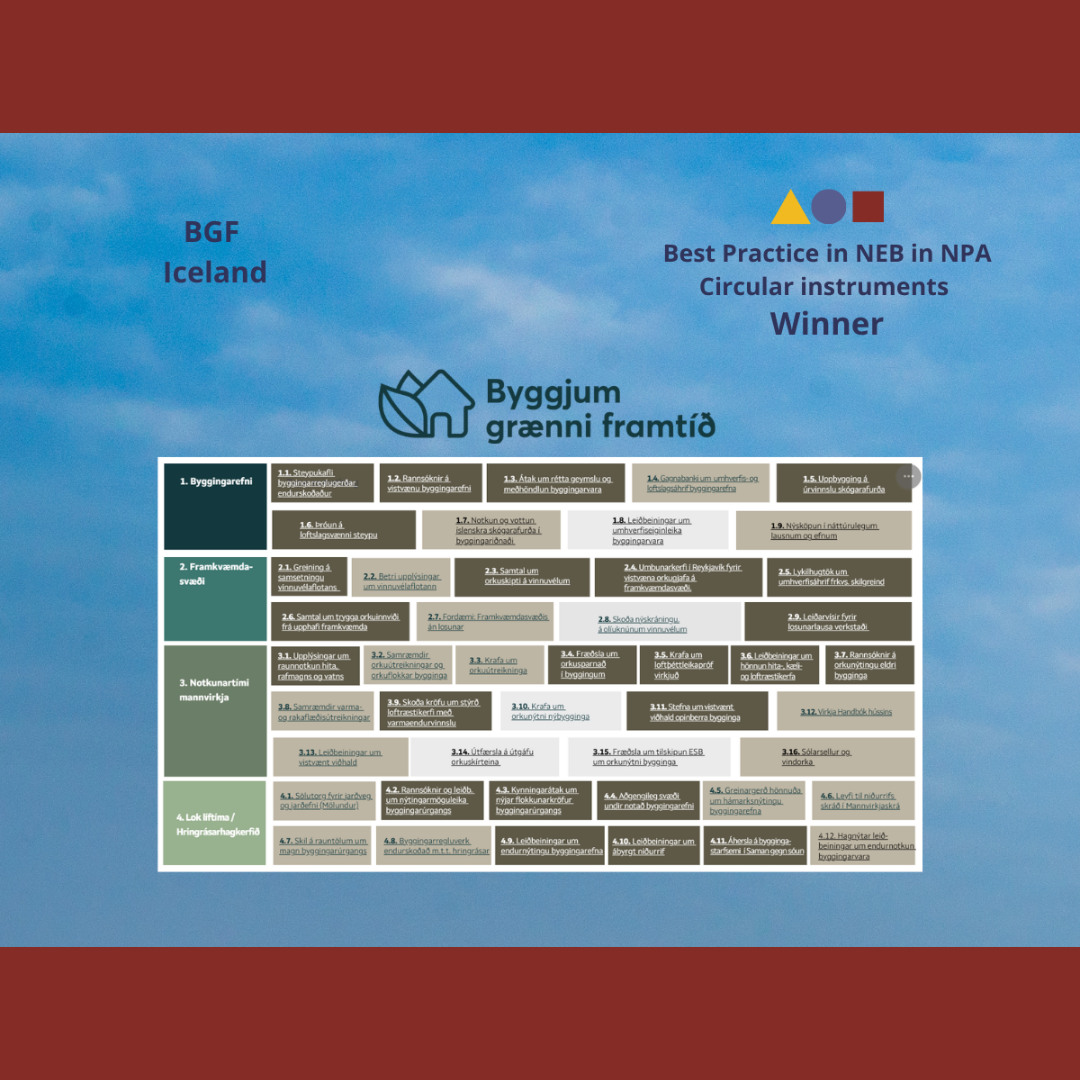
Winner: BGF - Iceland Byggjum grænni framtíð is a public-private project that manages a policy roadmap with 90 actions to facilitate sustainable construction. The roadmap was developed with input from over 200 stakeholders across the value chain, fostering ownership and commitment and resulting in a high implementation rate through an inclusive approach. The roadmap provides a clear framework for reducing greenhouse gas emissions throughout the building life cycle, including, among others, mandatory life-cycle assessments, material reuse, and recycling. It also highlights the importance of quality and cultural identity in the built environment. The initiative engages both the private and public sectors, draws on a variety of expertise, and operates at the local, regional, and national levels through a diverse group of stakeholders within its project management group. The roadmap’s comprehensive actions and collaborative approach offer a model for replicating these solutions throughout the NPA region.
Circular Buildings
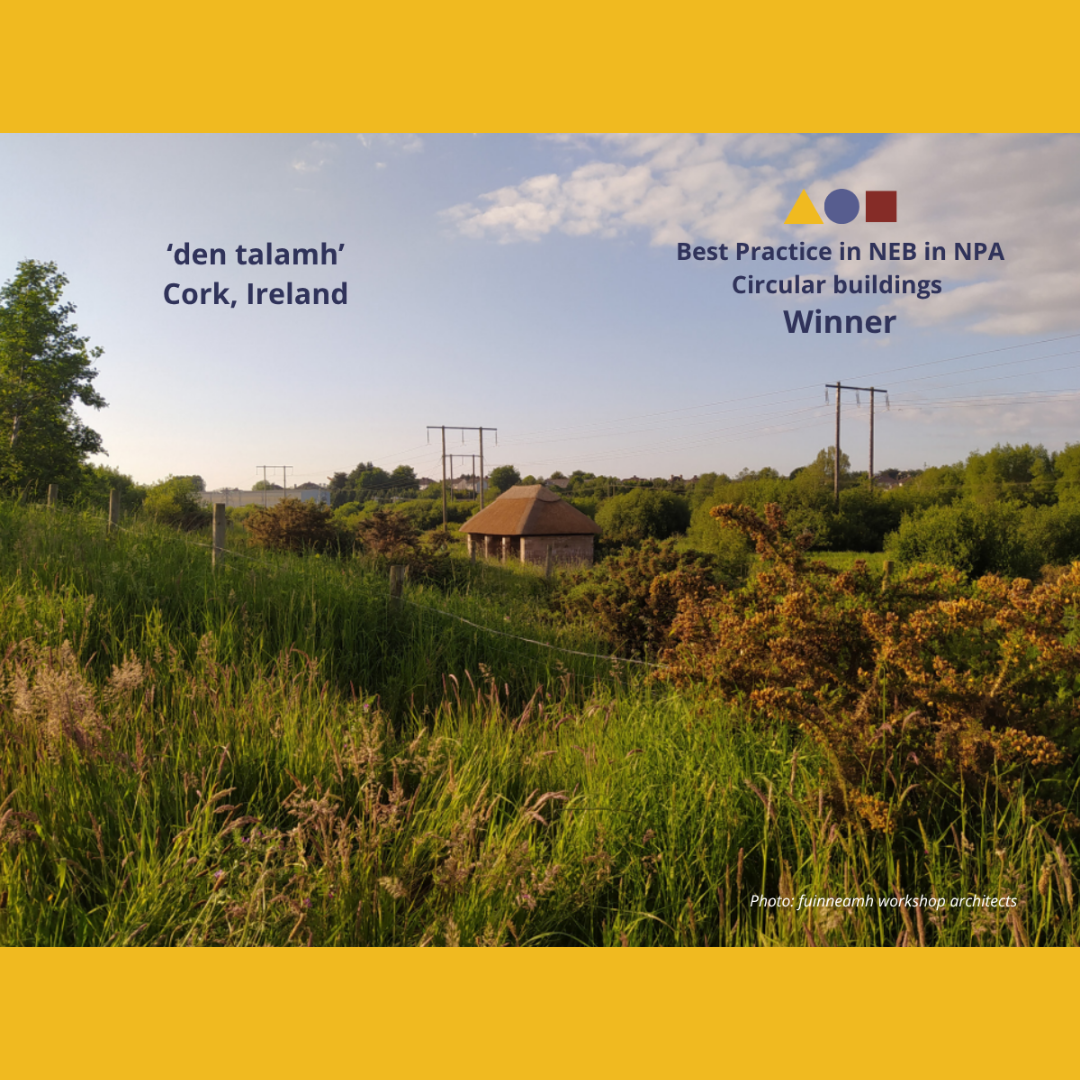
Winner: ‘den talamh’ – Cork, Ireland ‘den talamh’ is a 40-square-meter public building for community activities (e.g., concerts or workshops). Its design reflects input from both private and public stakeholders, serving as a platform for social exchange and interaction with nature. Student volunteers from local universities also contributed to construction, strengthening engagement with educational institutions and local communities. It was built mainly from vernacular materials (rammed earth, hoggin, reed, and timber) to integrate historically used materials with the building’s contemporary nature. It was designed to withstand weathering and extend its lifespan beyond 50 years. The open-plan structure allows for easy adaptation to different functions. A significant component of the project is its challenge to the status quo, specifically the perception of low-carbon vernacular materials. By showing these materials comply with current regulations and provide a positive user experience, the project highlights new possibilities for sustainable construction. This approach positions the project as an inspiration for other stakeholders in the NPA region.
Runner-ups
Below are the 4 runner-ups chosen for the 3 categories
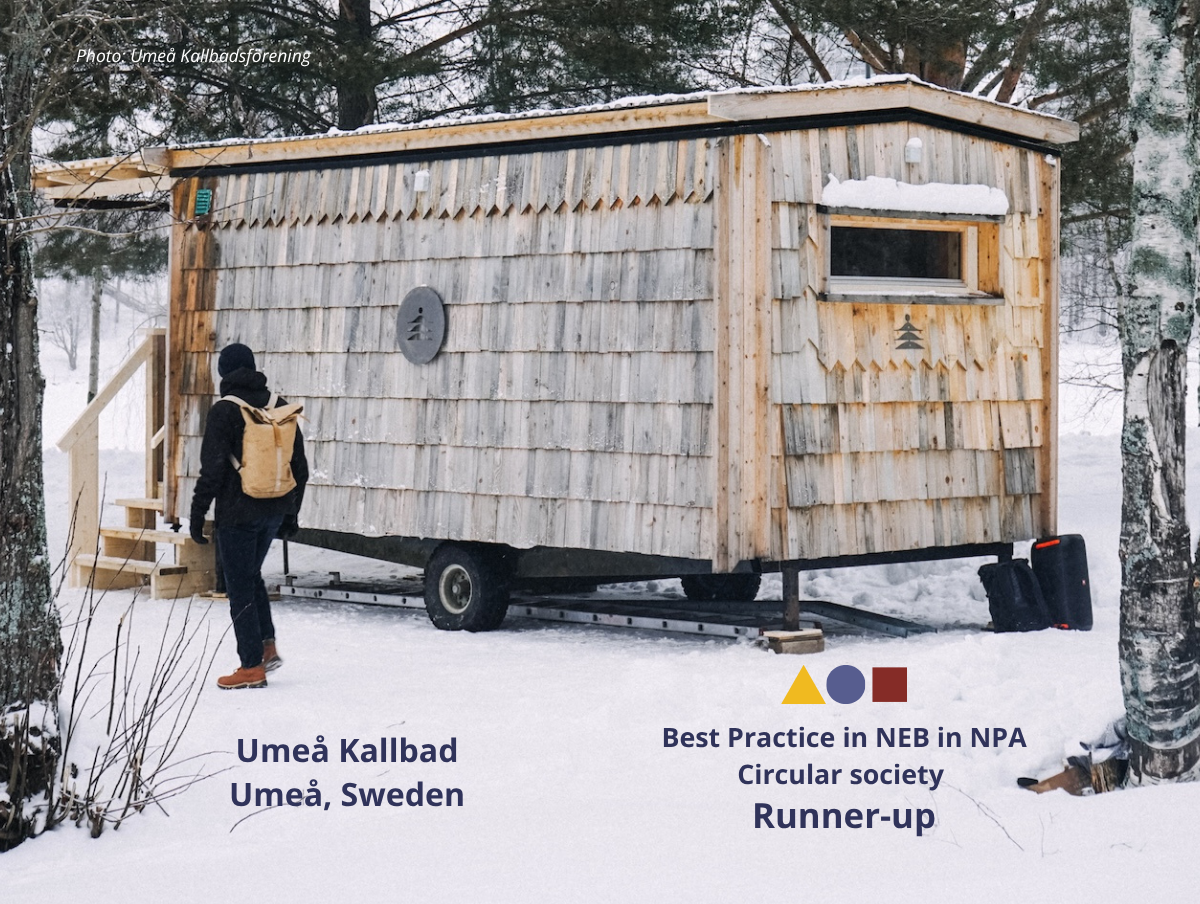
Runner-up: Umeå Kallbad – Umeå, Sweden
Umeå Kallbad is a community-run cold-bathing sauna initiative that is accessible (even in icy weather) and affordable for the local community (with free public events). The facility was constructed by volunteers, primarily from reused local materials. The project uses strong social components to support a cultural shift toward everyday, nature-oriented recreation that can be transferred to other parts of the NPA region. The project also aligns with municipal objectives for sustainable waterfront development, enhancing its multidimensionality.
Runner-up: Sirken – Norway
Sirken is a digital circular marketplace with a logistics system of permanent recycling centres and mobile solutions. It streams surplus, returned, B-grade, and reusable building materials back into the market. By offering affordable access to building materials for professionals and private users across various scales, Sirken addresses issues such as long transport distances, high material costs, limited supply chains, and inadequate circular infrastructure, especially benefiting isolated communities in the NPA region.
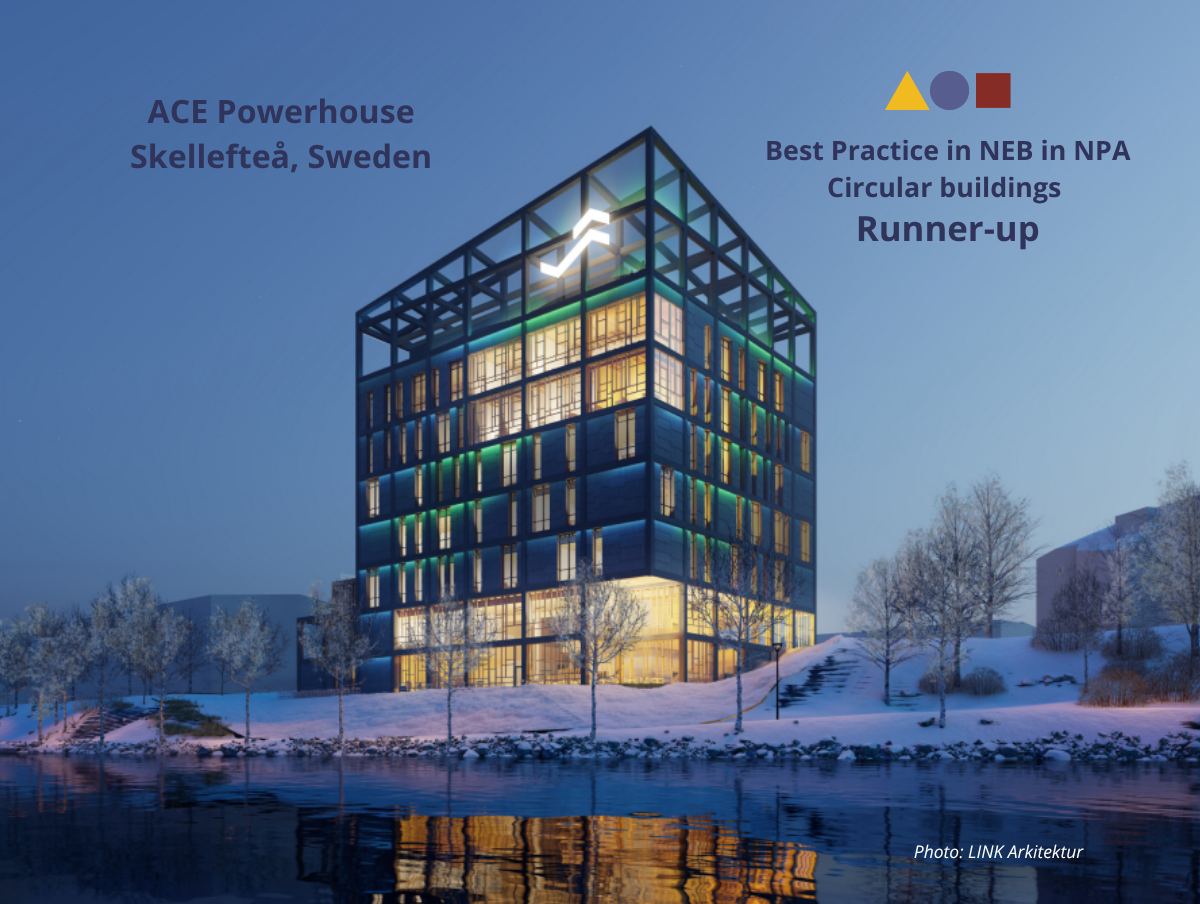
Runner-up: ACE Powerhouse - Skellefteå, Sweden
ACE Powerhouse is an 8,300-square-meter, seven-storey timber building set for completion in 2027. Designed to meet high environmental standards and emphasise material reuse (including the use of historical elements from an old hospital) and renewable energy, the building stands as a strong example of sustainable architecture. Dialogue with future users shaped the design, ensuring it meets community needs. The project demonstrates meaningful innovation in circular construction processes, including workflows for material inventories, reuse logistics and BIM integration, which can be replicated across the NPA region.
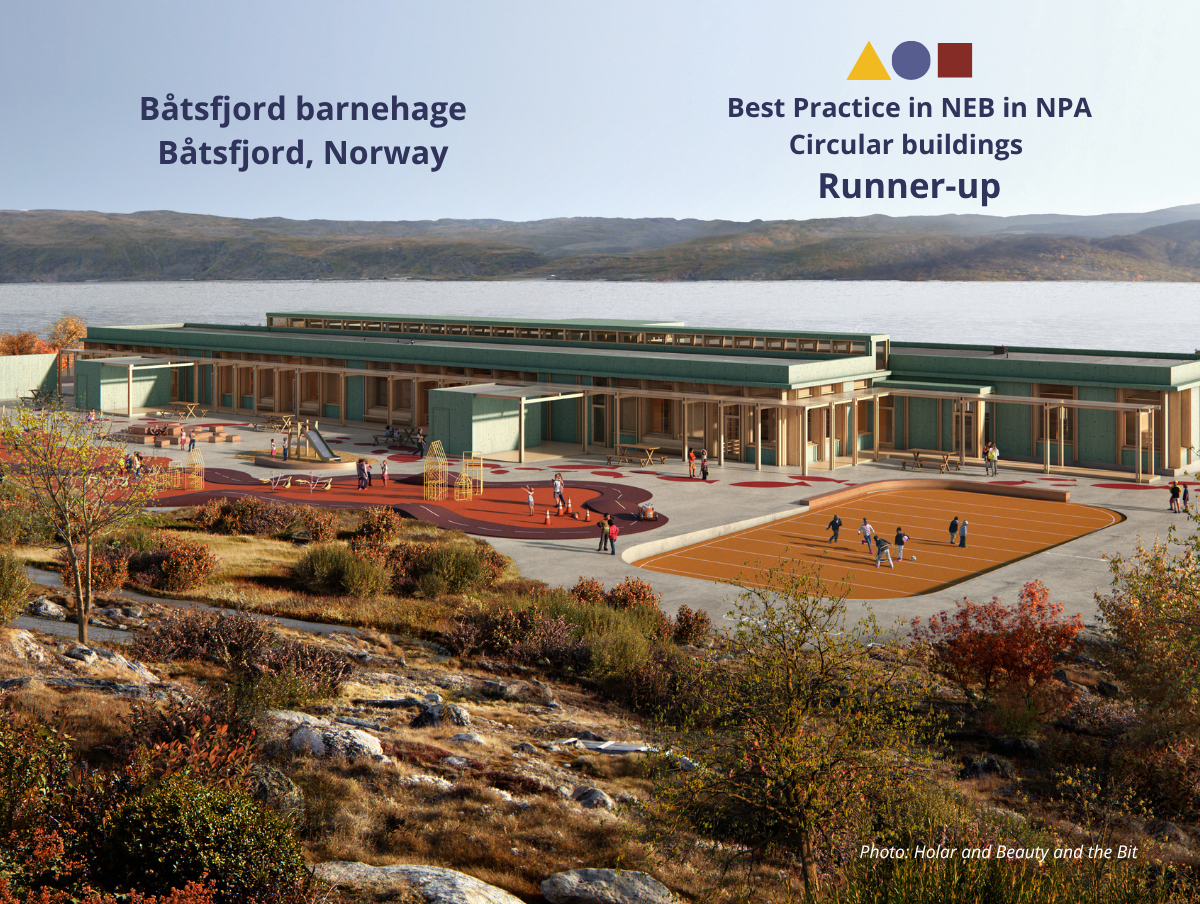
Runner-up: Båtsfjord barnehage – Båtsfjord, Norway
Båtsfjord barnehage demonstrates transformation in a high-latitude setting by converting a building slated for demolition into a kindergarten. The design prioritised material reuse within the project and in the broader context, with reused components left visible to highlight the building’s transformation and material history. Furthermore, daylight-driven spatial design connects the interior with the surrounding Arctic landscape. Importantly, involving building users, owners, and the local community was a central pillar throughout the design and later project phases. Taken together, this methodology offers strong potential for adaptation in the NPA region.
Runner-up
Images of the runner-up projects