The Hidden Treasures of the North: A New Life for Nature’s “Waste”
Imagine a world where nothing is truly wasted where forest leftovers
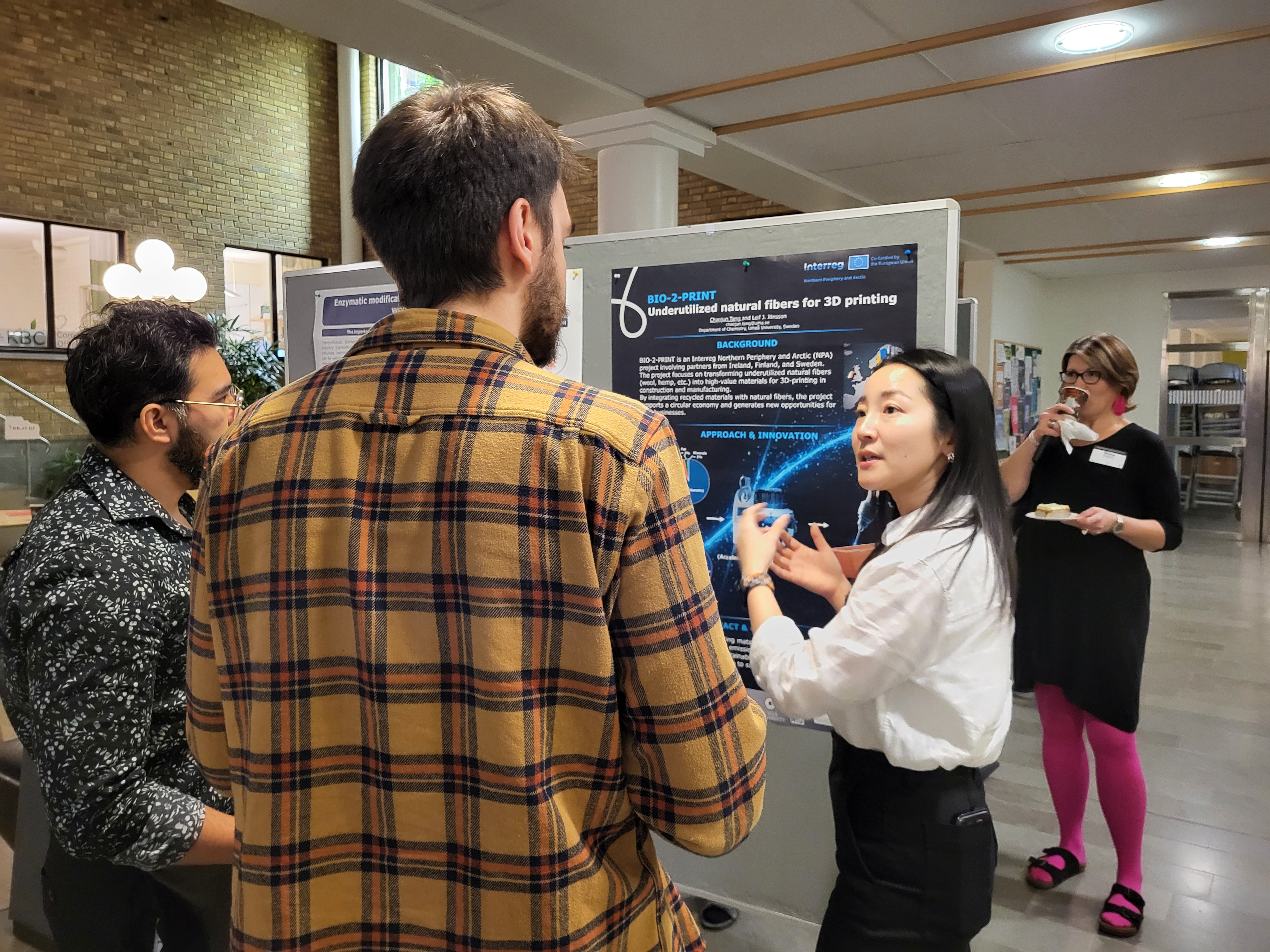
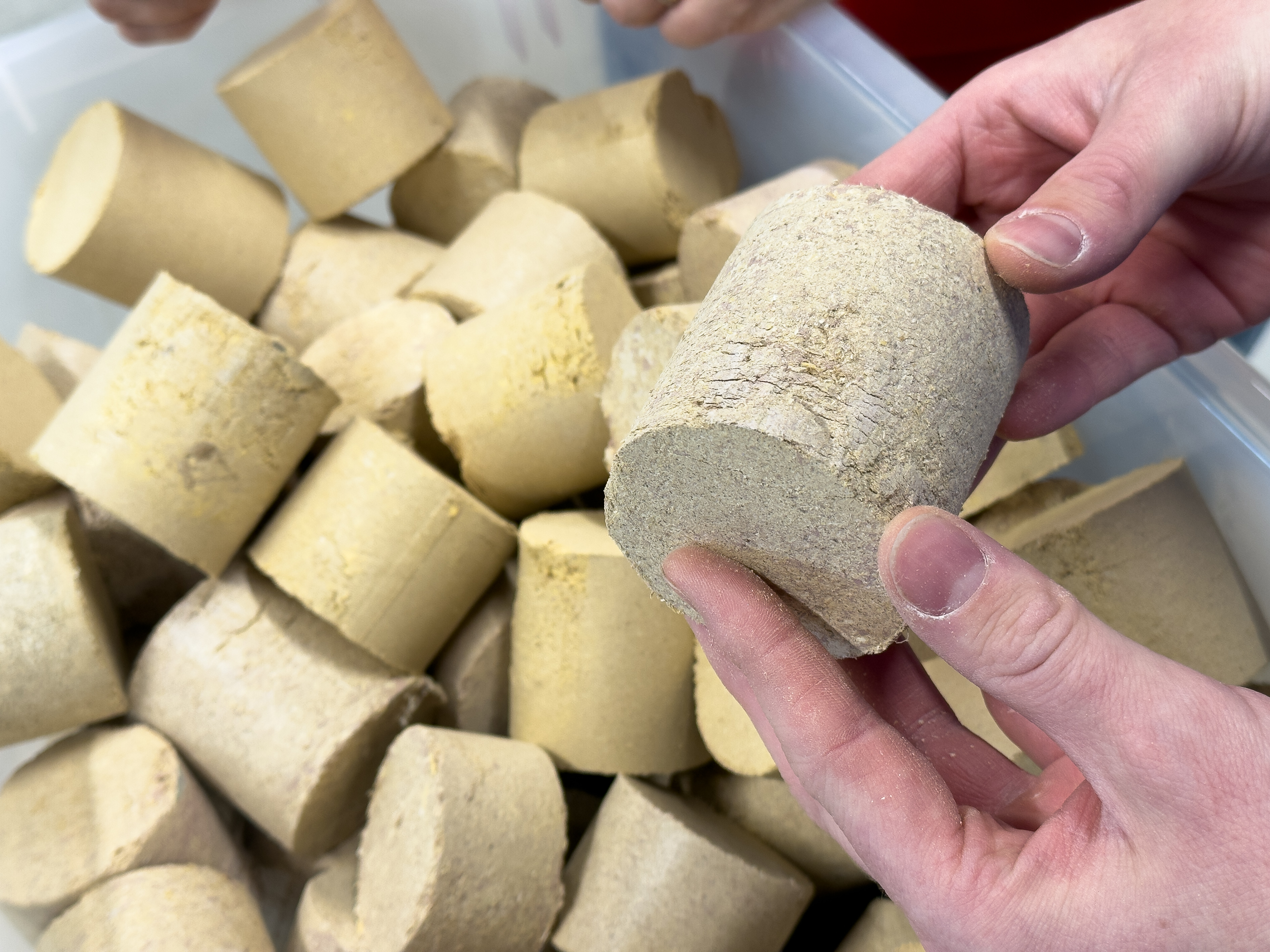
Imagine a world where nothing is truly wasted, where forest leftovers, reindeer hair, and the wool of a lonely sheep on an Irish hillside are high-tech building blocks. This is the vision of the BIO-2-PRINT project, an initiative identifying underutilized natural fibres across Ireland, Finland, and Sweden to transform them into advanced composite materials.
The Irish Mystery: Wool, Seaweed, and Hemp
In Ireland, millions of sheep dot the green landscape, yet their wool is often viewed as a “nuisance by-product” with almost no market value. Every year, 7,000 tonnes (7 million kg) of wool is produced, but over 80% remains unutilized or is exported cheaply (Department of Agriculture, Food and the Marine, 2021). Scientists have discovered this wool is packed with keratin, which can make 3D-printed concrete stronger and better at insulating our homes (Alyousef et al., 2022).
Along the rugged Irish coast, seaweed offers another treasure. With an annual volume of approximately 40,000 tonnes, extracts like alginate are being studied to help 3D-printed buildings dry evenly, preventing cracks (Marine Institute, 2023; Tenório Filho et al., 2022). Nearby, the hemp industry shows potential, with peak yields reaching 6,837 tonnes of stems annually, providing cellulose-rich "hurds" for building materials like hempcrete (Madden et al., 2022).
Finland’s Forest Secrets
In Finland, the birch tree reigns supreme. While the wood is used for furniture, its bark is often just burned for energy. The scale is massive: Finland produced approximately 7 million m³ of tree bark in 2021, including 1.44 million m³ of birch bark specifically (Natural Resources Institute Finland, 2023). This bark contains compounds like tannins for flame retardancy and lignin for UV stability in plastics.
Manufacturing leftovers are also being rescued. The Finnish sector generates 1.5 million tons of wood waste annually. High-quality scraps like the 19,000 tons from sectors including boat building are perfect fillers for new biocomposites (Official Statistics of Finland, 2023).
Sweden’s Wild Resources
In the snowy north of Sweden, the reindeer leather industry produces approximately 150,000 hides annually (Bole Tannery, n.d.). These hides provide keratin-rich fibre that could reinforce new lightweight 3D-printing filaments. Sweden also mirrors Ireland’s wool challenge, producing about 1,000 tons annually, more than half of which is currently burned or discarded (Swedish Sheep Breeders’ Association, 2022). Finally, along the Swedish and Finnish coastlines, 260,000 hectares of reeds sway in the wind. When harvested seasonally, these plants can be turned into sturdy particle boards or used to reinforce plastics (Linderbäck et al., 2024).
Closing the Loop
Mapping these resources proves that the path to a circular economy is paved with materials once thrown away. By turning thousands of tonnes of "waste" into high-value materials, we can support rural economies and build a sustainable, low-carbon future.
References
Alyousef, R., Mohammadhosseini, H., Ebid, A. A. K., & Alabduljabbar, H. (2022). An Integrated Approach to Using Sheep Wool as a Fibrous Material for Enhancing Strength and Transport Properties of Concrete Composites. Materials, 15(5), 1638. https://doi.org/10.3390/ma15051638
Bole Tannery. https://boletannery.com/bole/leather/nordic-reindeer/ (Accessed on 25.11.2025)
Department of Agriculture, Food and the Marine. (2021). Review of market opportunities for Irish-grown wool-based products [Feasibility study]. Government of Ireland. https://as-sets.gov.ie/static/documents/wool-feasibility-study.pdf
Linderbäck, P., Gebrehiwot, S., Montin, L., Björkvall, R., Suarez, L., Theis, J., & Ortega, Z. (2024). Common reed as a novel biosource for composite production. In Proceedings of the 21th European Conference on Composite Materials. The European Society for Composite Materials and Ecole Centrale de Nantes
Madden, S. M., Ryan, A., & Walsh, P. (2022). A systems thinking approach investigating the estimated environmental and economic benefits and limitations of industrial hemp cultivation in Ireland from 2017–2021. Sustainability, 14(7), 4159. https://doi.org/10.3390/su14074159
Marine Institute (2023). Seaweed Harvesting in Ireland: A Socio-economic Study. EMFF Blue Growth Programme. Retrieved from https://emff.marine.ie/sites/default/files/blue-growth/PDFs/Socioeconomic%20Study%20of%20Seaweed%20Harvesting%20in%20Ire-land.pdf
Natural Resources Institute Finland (Luke). Total roundwood removals and drain by region 2023, https://www.luke.fi/en/statistics/total-roundwood-removals-and-drain/total-round-wood-removals-and-drain-by-region-2023 (Accessed on 25.11.2025)
Official Statistics of Finland (OSF): Waste statistics [online publication]. Reference period: 2023. ISSN=2323-5314. Helsinki: Statistics Finland. Source: https://stat.fi/en/publica-tion/cm1htqu3a3rjj07w5tidiyjuz (Accessed on 25.11.2025)
The Swedish wool broker. https://swedishwoolbroker.com/fromsheeptoproduct/Sheepfacts (Accessed on 11.02.2026)
Tenório Filho, J. R., Pereira Gomes de Araújo, M. A., Mannekens, E., De Belie, N., & Snoeck, D. (2022). Alginate- and sulfonate-based superabsorbent polymers for application in cementi-tious materials: effects of kinetics on internal curing and other properties. Cement and Concrete Research, 159, Article 106889. https://doi.org/10.1016/j.cemconres.2022.106889