News

From Geothermal Expertise to Solar Breakthroughs in Iceland

Partner spotlight: Environmental and Energy Agency Within the HYBES project, Iceland’s Environmental and Energy Agency has played a leading role in Pilot 3.3 on geothermal solutions, while also contributing to solar energy pilots and developing tools for education and citizen guidance on decarbonisation.

Date
26.11.2025
Turning a gap into an opportunity

At the start of HYBES, Iceland already had strong experience with geothermal energy, citizen engagement tools, and education for decarbonisation. However, one gap stood out: the policy framework, practical guidance, and shared knowledge around solar panels and small-scale solar installations were limited.

Through HYBES, the Agency adopted the triple helix approach, bringing together public authorities, industry actors, and knowledge institutions. In 2024, this resulted in a multi-stakeholder meeting focused on solar installation, registration, and grid connection.

A key outcome was the development of an instruction manual for micro power systems under 100 kW, making it much easier for individuals to understand how to install and connect solar systems legally and safely.

Solar grants for fragile and remote systems

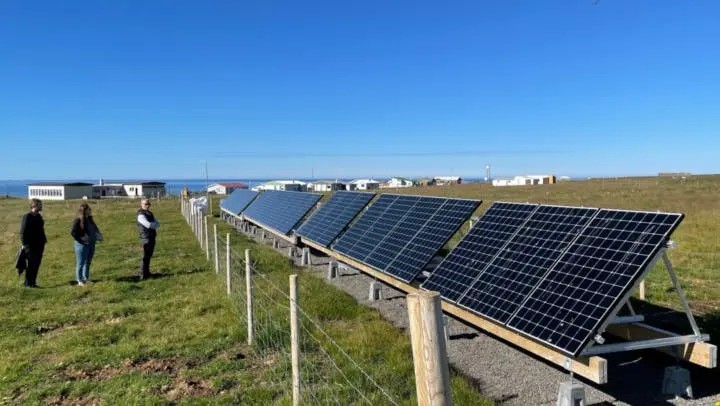
Building on this foundation, the Agency launched a targeted solar installation grant aimed at fragile and remote systems—households located outside the main electricity grid and heavily reliant on fossil fuels for power and heating.

The response exceeded expectations:

  • Over 90 applications were received
  • 29 projects were funded
  • In every approved case, solar panels are replacing fossil fuel use.

By September 2025, one-third of the funded systems were already installed and operational. Applicants shared production data, photos, and personal stories, reporting that solar output consistently exceeded their expectations. Several households are now planning to expand their solar capacity.

Changing attitudes in local communities

Beyond the technical results, the projects have had a strong social impact. In many remote areas, solar installations have sparked local interest and discussion. Community attitudes have shifted towards a more positive and confident view of solar energy, even in regions traditionally dominated by other energy sources.

In autumn 2025, Iceland saw a major shift in the electricity market, allowing home-to-grid electricity production for private solar owners. In response, the Environmental and Energy Agency plans to update the instruction manual and convene a new triple helix stakeholder meeting, once again using the collaborative framework introduced through HYBES.

This journey—from geothermal leadership to solar innovation—shows how shared learning and collaboration can unlock new pathways for decarbonisation, even in places where the conditions once seemed challenging.

Other news from Iceland

News
30.09.2024

Orkustofnun Hosts Key Meetings to Streamline PV Installations

News
04.12.2024

Solar Cell Grant Program Strengthens Iceland's Energy Future

News
01.03.2025

Monitoring Energy Improvements in Rural Areas of Western Iceland: Grundarfjörður