News

Day 3 in Galway: The Aran Islands as a classroom

A group of facilitators-in-training from Ireland, Iceland, Finland, Norway and Sweden reunited in Galway, the place where their 1.5‑year journey to become facilitators supporting rural social enterprises first began. On day 3 of the gathering, the participants crossed the sea to Inis Mór to meet the rural cooperatives that anchor life on the largest of the Aran Islands. Guided by islander Micheál Ó Conghaile of Údarás na Gaeltachta, the group explored how community led organisations shape resilience in a place defined by both beauty and constraint.

Date
02.03.2026
This article is the third and last in a series of three, exploring the MERSE Leadership Training Programme meeting in Galway 23–25 February 2026.

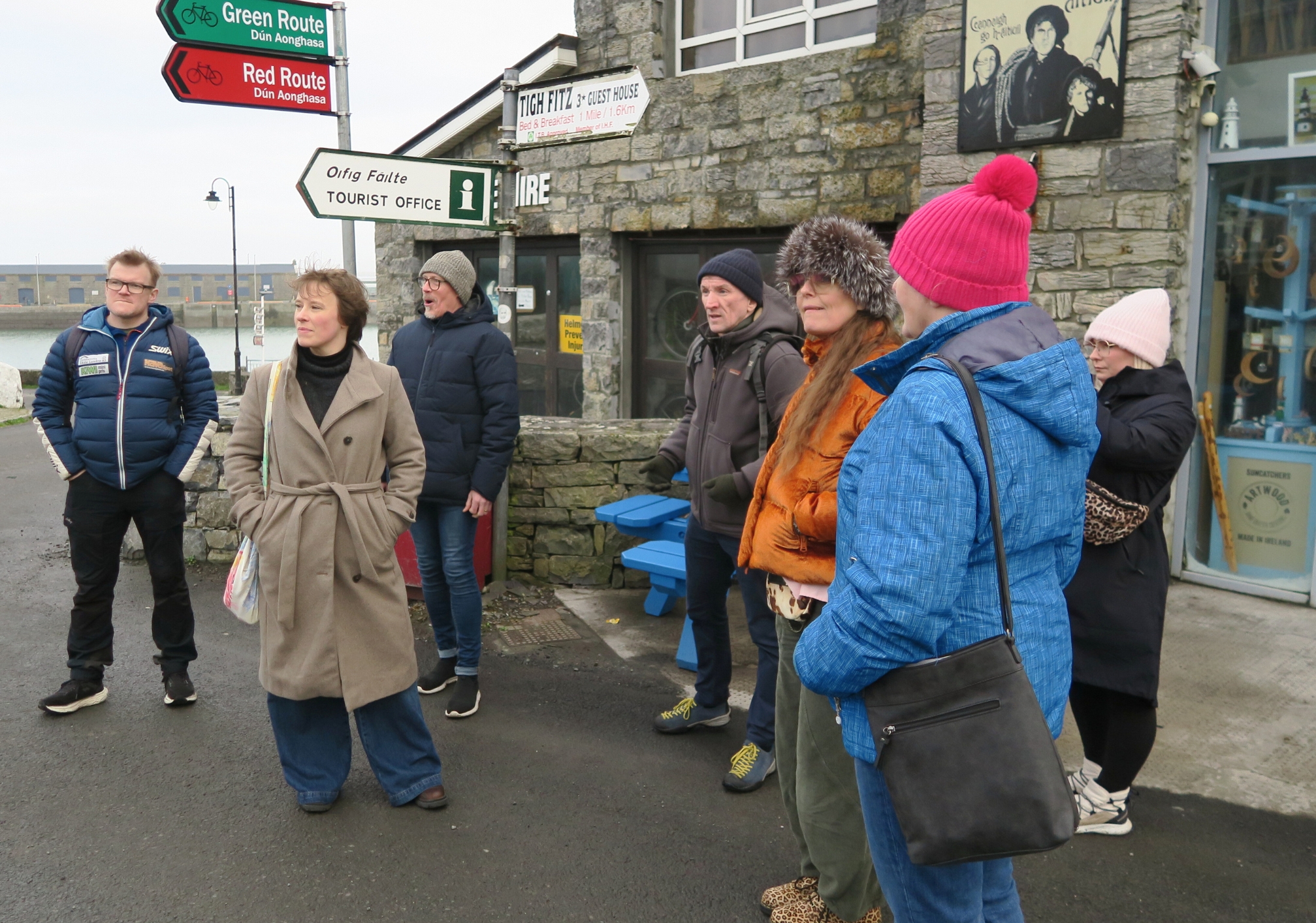
Early in the morning on February the 25th, the third day of the Leadership Training Programme meeting in Galway, the participants from Ireland, Iceland, Finland, Norway and Sweden travelled by bus to Rossaveal. From there, they continued by ferry toward the island Inis Mór. The largest of the three Aran Islands. 

For the participants, the journey itself set the tone. A shift from the city pace to the slower rhythm of rural island life. Micheál Ó Conghaile who grew up on Inis Mór, framed the day as a chance to observe how community entrepreneurship becomes essential infrastructure when the nearest mainland lies across open water.

First study visit: Comharchumann Forbartha Árann is keeping daily life possible

The first visit was to Comharchumann Forbartha Árann, the Local Development Company. Here, the participants of the MERSE Leadership Training Programme learned how the organisation sustains everything from an automated fuel station to an Irish language centre and playgrounds. They also advocate for residents, coordinate funding, and ensure services are maintained long after initial project grants end.

The group gained insight into the creative problem‑solving required in small communities: automating pumps to avoid staffing, co‑locating public services, and mobilising local voices to shape priorities.

Second study visit: Comharchumann Fuinnimh Oileáin Árainn, energy transition as a community project

Next, Avril Ní Shearcaigh introduced the participants of the MERSE Leadership Training Programme to the work of the Aran Islands Energy Co‑operative, whose ambition is to make the three islands self‑sufficient in locally generated renewable energy. More than 300 of 500 homes have already been retrofitted with insulation, heat pumps and solar technologies, and 370 kW of PV is installed across rooftops.

What struck the participants was the cooperative’s method: organising households to retrofit or install new electrical solutions together, reducing costs and building shared momentum. They also collaborate extensively with universities and research projects, hosting researchers who help tackle island‑specific challenges.

Third study visit: Athchursáil Árann, circular solutions under pressure

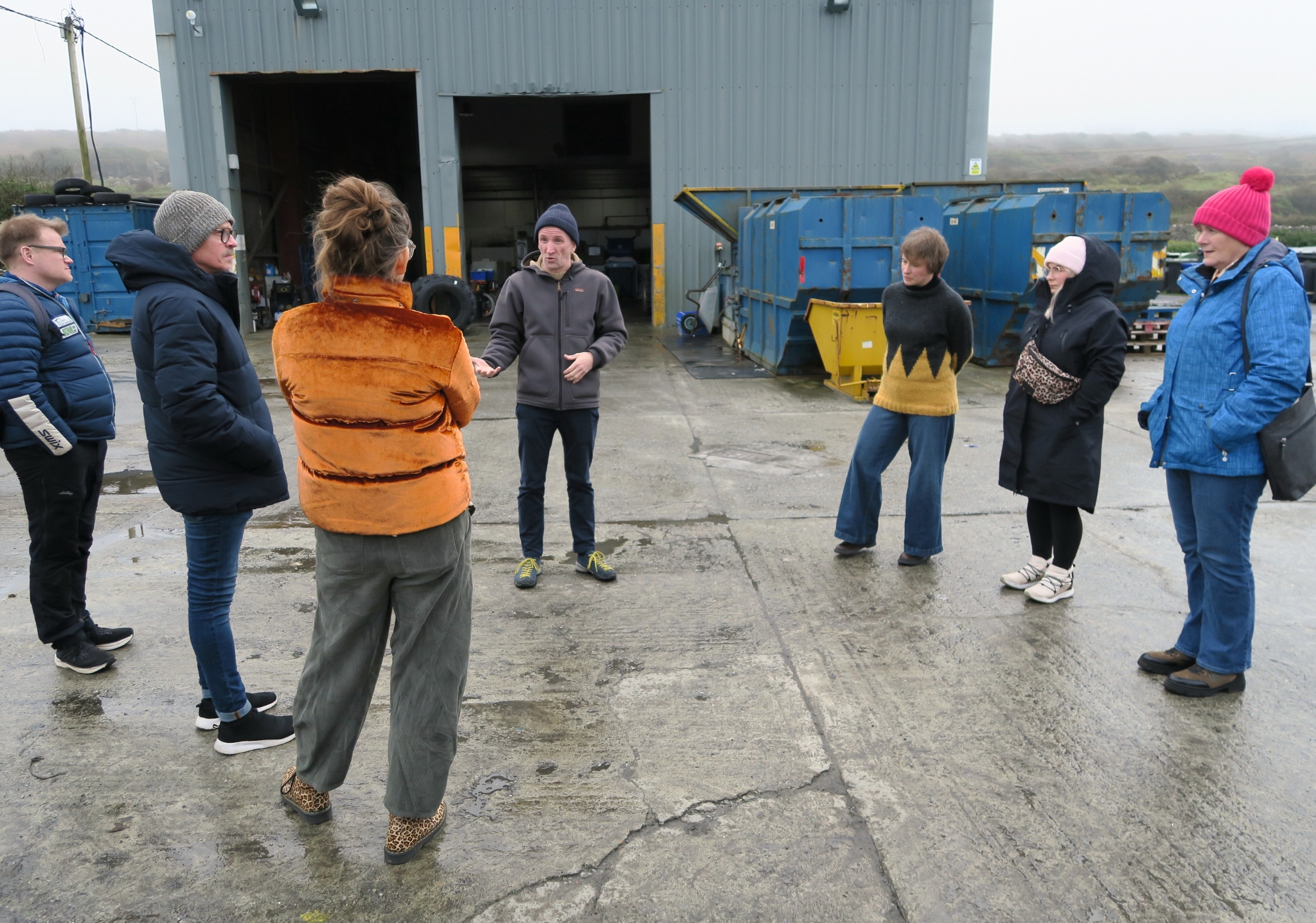
The final stop was Athchursáil Árann, the island’s recycling co‑operative. Despite very few permanent residents, Inis Mór receives around 250,000 visitors each summer. Yet the community has built an innovative waste system that reaches nearly 60% recycling rates, crushing glass for construction, composting organic waste, and reusing bulky materials.

For the facilitators, this was a vivid example of how local ownership transforms necessity into invention.

What the facilitators took home

The day on Inis Mór gave participants a tangible sense of what rural social enterprises can achieve through collective effort and practical ingenuity. They saw organisations that blend culture, sustainability and everyday needs while navigating constraints that mirror those in rural communities across the MERSE partnership.

Three insights stood out: 

  • Community enterprises thrive where solutions grow from place- and people based needs and resources. 
  • Facilitators can support groups by helping them identify what must function reliably, not only what is new or visionary.
  • Partnerships, both local, regional and international, are essential to long-term resilience in a rural community. 

Reflections from facilitators-in-training

Eileen Davis from Ireland:
It has been incredibly inspiring to see and hear what others are doing. I will go home and use the power of facilitation when I meet other social enterprises.”

Heiðrún Björk Jóhannsdóttir from Iceland:
I am so inspired by the people! What they do, what they share. I will truly take that with me. It’s fascinating that we come from different places, work in different rural communities with different social enterprises, yet face very similar challenges.

Learn more about the MERSE Leadership Training Programme

In 2024, the MERSE project partners recruited a total of 12 rural social enterprises from the five participating regions within the Northern Periphery and Arctic Programme (NPA). These enterprises took part in approximately 1.5 years of leadership training through the Leadership Training Programme, designed to test new methods, transfer successful practices, and develop a peer-to-peer learning model for rural social enterprises.

Meet the participants of the Leadership Training Programme and learn about the social enterprises they run or manage here.

Related news

News
01.03.2026

Day 1 in Galway: From challenges to shared insights among the facilitators

News
28.02.2026

Leadership Training Programme reunited in Galway