Key insights on scaling up cooperations in rural areas
45 voices. One shared question: How do cooperations grow in rural areas, without losing their soul? On 11 February, 45 participants joined the MERSE webinar "Scaling up cooperation in Rural Areas". We asked the organisers to summarize the webinar and share key insights.
The 45 participants who joined the MERSE webinar Scaling cooperation in Rural Areas, came from Sweden, Norway, Ireland, Finland, Iceland, Romania, Italy and other parts of Europe. The group was a mix of researchers, regional development officers, municipal representatives, cooperative advisors and rural entrepreneurs.
Among them were academics from Mid Sweden University and the University of Helsinki, representatives from Coompanion in Sweden, regional agencies from Iceland and practitioners working in food production, renewable energy and honey sectors. In short: people who talk about rural development, but also live it.
What was being discussed during the webinar
– We talked about scaling, but not at any cost. The central question was simple and quite bold: How can cooperatives grow without compromising democracy, sustainability and local ownership, said Pelle Persson and Susanne Vinderå from Swedish Coompanion, who organized the webinar together with Ruralia Institute at the University of Helsinki.
Research insights were shared by Taneli Vaskelainen from RURALIA Institute, who has done his research on cooperative resilience and growth, including large-scale examples such as Finland’s S-Group. Tanelis' contribution grounded the discussion in evidence: cooperatives can scale successfully, but only if governance and purpose grow alongside turnover.
Participants identified recurring barriers
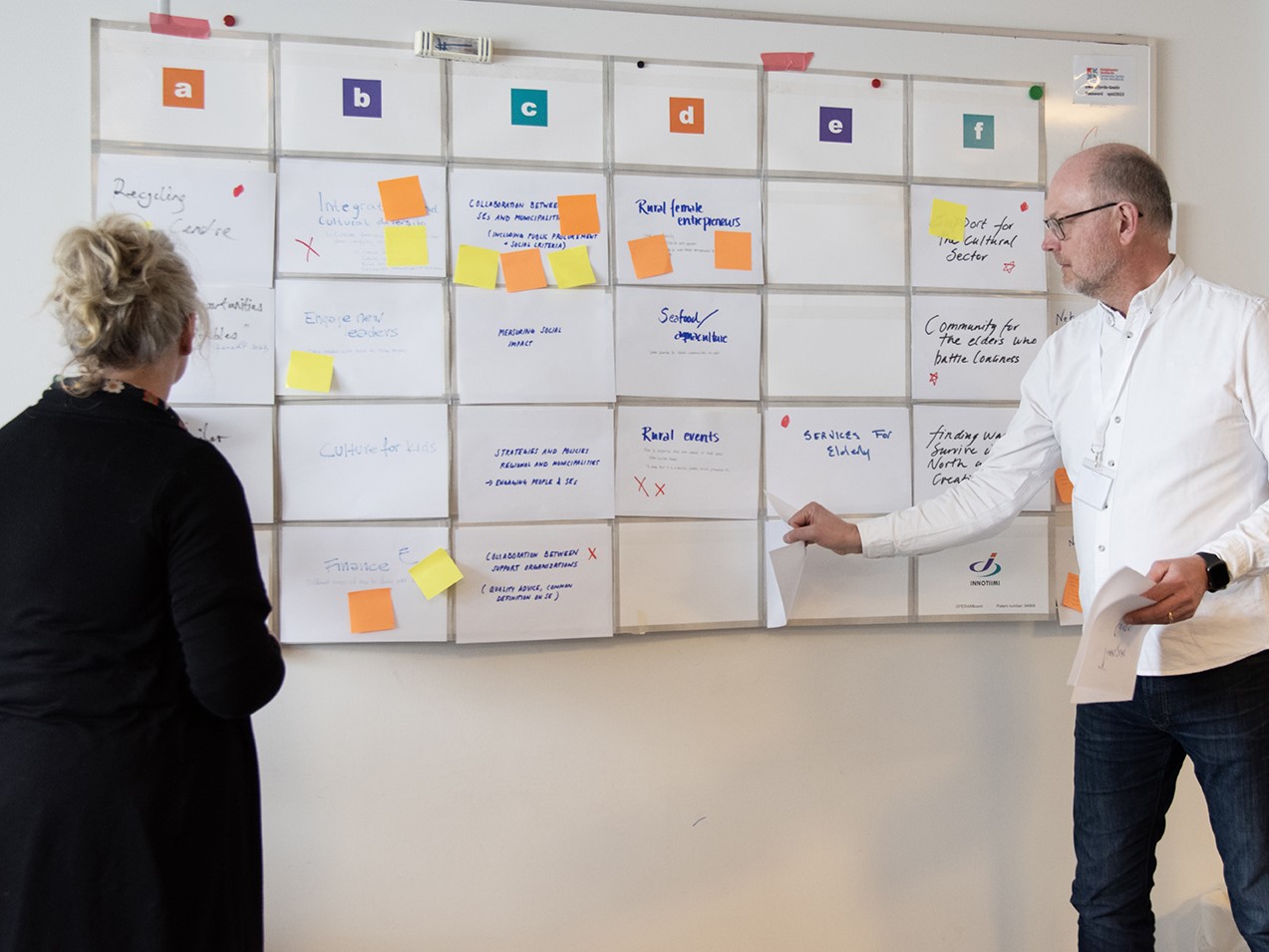
Some recurring barriers for scaling in rural areas was identified. Among the barriers the following was listed:
- Limited access to finance
- Shortage of skilled labour in rural areas
- Regulatory systems not designed for cooperative model
- Public funding instruments that do not fully recognise democratic
- ownership structures
Resilience, crucial to scaling in rural contexts
– On the other side we talked about different opportunities. Renewable energy. Local food systems. Tourism. Circular economy. Community services. Rural areas are not lagging. In many ways they are leading experiments in inclusive, sustainable and democratic businesses. A key takeaway was that scaling in rural contexts is less about speed and more about resilience. Growth must strengthen the community, not extract from it, said Pelle Persson and Susanne Vinderå from Coompanion.
The speakers background in the field of scaling in rural areas
The MERSE project and partnership brings together organisations with long experience in cooperative development, rural entrepreneurship and research.
The Coompanion representatives Pelle and Susanne, have decades of experience of supporting cooperative start-ups and social enterprises across Sweden. Academic partners contribute with research on sustainable business models and cooperative ecosystems. Regional development actors bring practical policy experience and close contact with municipalities and entrepreneurs.
This combination of practice, research and regional perspective gives the MERSE project depth and credibility – and keeps discussions grounded in real-world challenges.
Discussions during the webinar
– The discussions were lively, multilingual and honest. Participants were encouraged to speak in their own languages during breakout sessions. That shifted the energy immediately, conversations became more open and nuanced, said Susanne Vinderå.
In Romania, honey producers explained how historical stigma still affects the word “cooperative”, leading them to organise under different labels. In Iceland, food producers described pop-up markets and informal collaboration as stepping stones towards more formal structures.
Swedish participants shared examples of municipalities acting as anchor customers for cooperatives – a practical tool that can make the difference between survival and growth. Norwegian contributions touched on integration initiatives and how cooperative models can support both economic development and social inclusion.
Questions that were raised
Some of the questions that were raised during the webinar was: How do we attract skilled people to rural cooperatives? How can cooperative models become more flexible without losing their identity? What regulatory changes are needed?
What stood out was not disagreement, but shared recognition. Across countries, the patterns were surprisingly similar, said Susanne and Pelle.
How did you feel afterwards, were you happy with the outcome of the webinar?
– It was truly energising. There was strong engagement throughout the session. People stayed, contributed and asked questions. The feeling afterwards was not only that we had strengthened a network, but also started a conversation that should continue, said Susanne.
Renewed interest among younger practitioners
One of the most encouraging insights, Susanne and Pelle told us, was a renewed interest in democratic business models among younger researchers and practitioners. In times of economic uncertainty and environmental pressure, cooperative models are not nostalgic relics. They are practical tools for resilience.
Rural areas are often described as peripheral. This conversation suggested something else entirely: Rural Europe may well be at the forefront of rethinking how we do business – together.