University of Helsinki Researchers Present Rural Real Estate Research at Nordic Geographers Meeting
Researchers Annamari Kiviaho and Toni Ryynänen from the University of Helsinki’s Ruralia Institute presented their latest research at the Nordic Geographers Meeting, held in Reykjavík, Iceland, from 22 to 25 June 2026.

The international conference brought together geographers and researchers to exchange knowledge on social, economic and environmental challenges affecting communities across the Nordic region. Annamari and Toni contributed to these discussions through presentations examining the housing and public real estate challenges facing shrinking rural municipalities in Finland.
Local responses to housing and real estate challenges
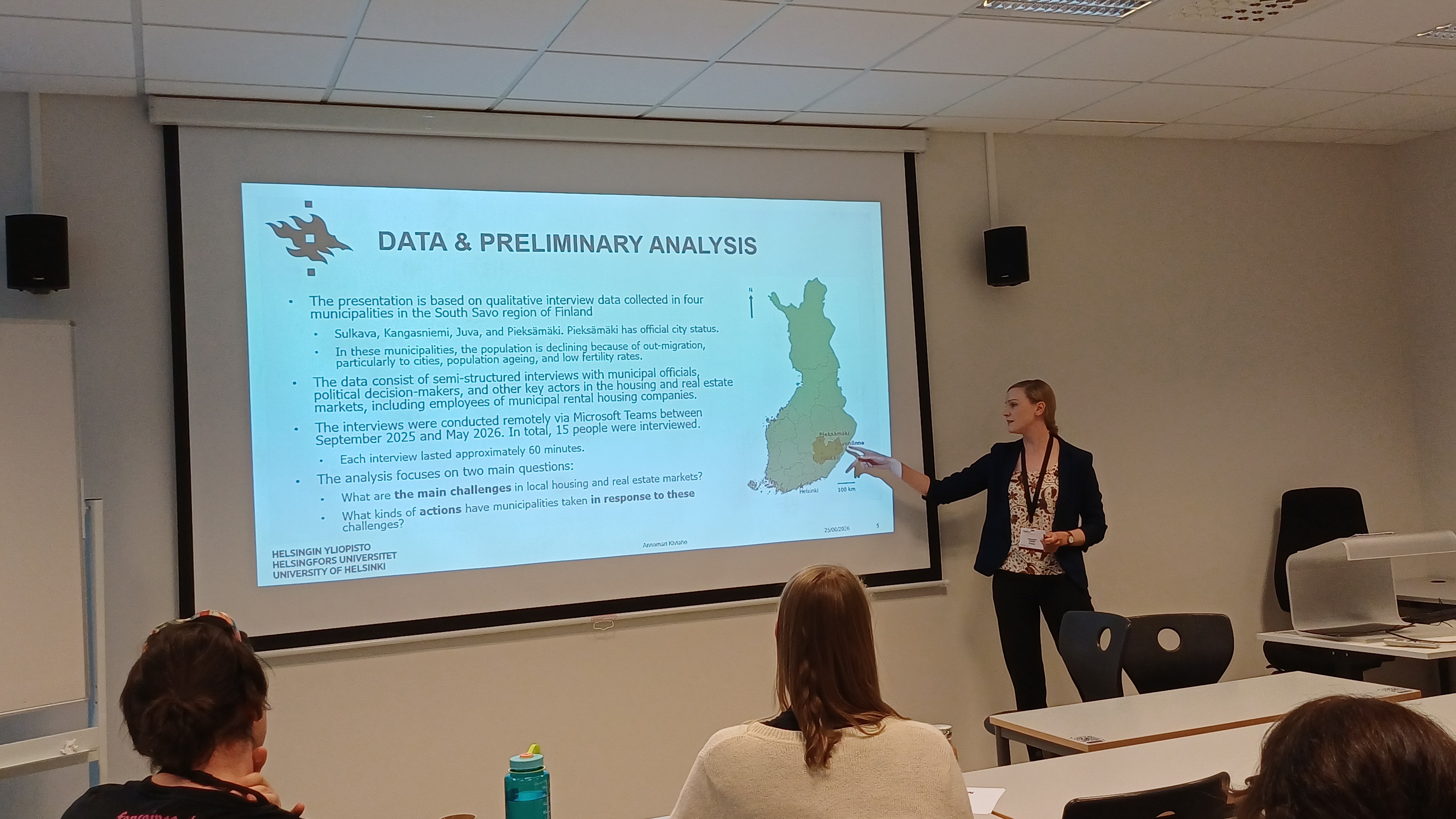
Annamari’s presentation, Local Responses to Housing and Real Estate Market Challenges in Shrinking Regions, examined how municipalities respond when existing housing and property stocks no longer reflect local demand.
Population decline, ageing populations and out-migration can leave rural regions with falling property prices, low collateral values, high vacancy rates and underused buildings. These conditions can make it more difficult for individuals and businesses to secure finance for property purchases, renovations and new construction.
Drawing on interviews with 15 municipal officials, political decision-makers and other housing and real estate stakeholders in four municipalities in Finland’s South Savo region, the research explored both the main challenges facing local property markets and the actions being taken in response.
The findings indicate that municipalities are working to address these challenges by attracting businesses and employment, offering housing incentives, investing in public facilities, supporting new construction through land-use planning and improving the visibility of vacant properties. Municipalities are also adjusting their own housing portfolios through renovation, new development and, where necessary, demolition to reduce oversupply.
Although municipalities cannot control the decisions of private property owners, investors or banks, the research demonstrates that they can help create more favourable conditions for investment, renovation and the reuse of vacant buildings.
Understanding the stigma attached to obsolete buildings
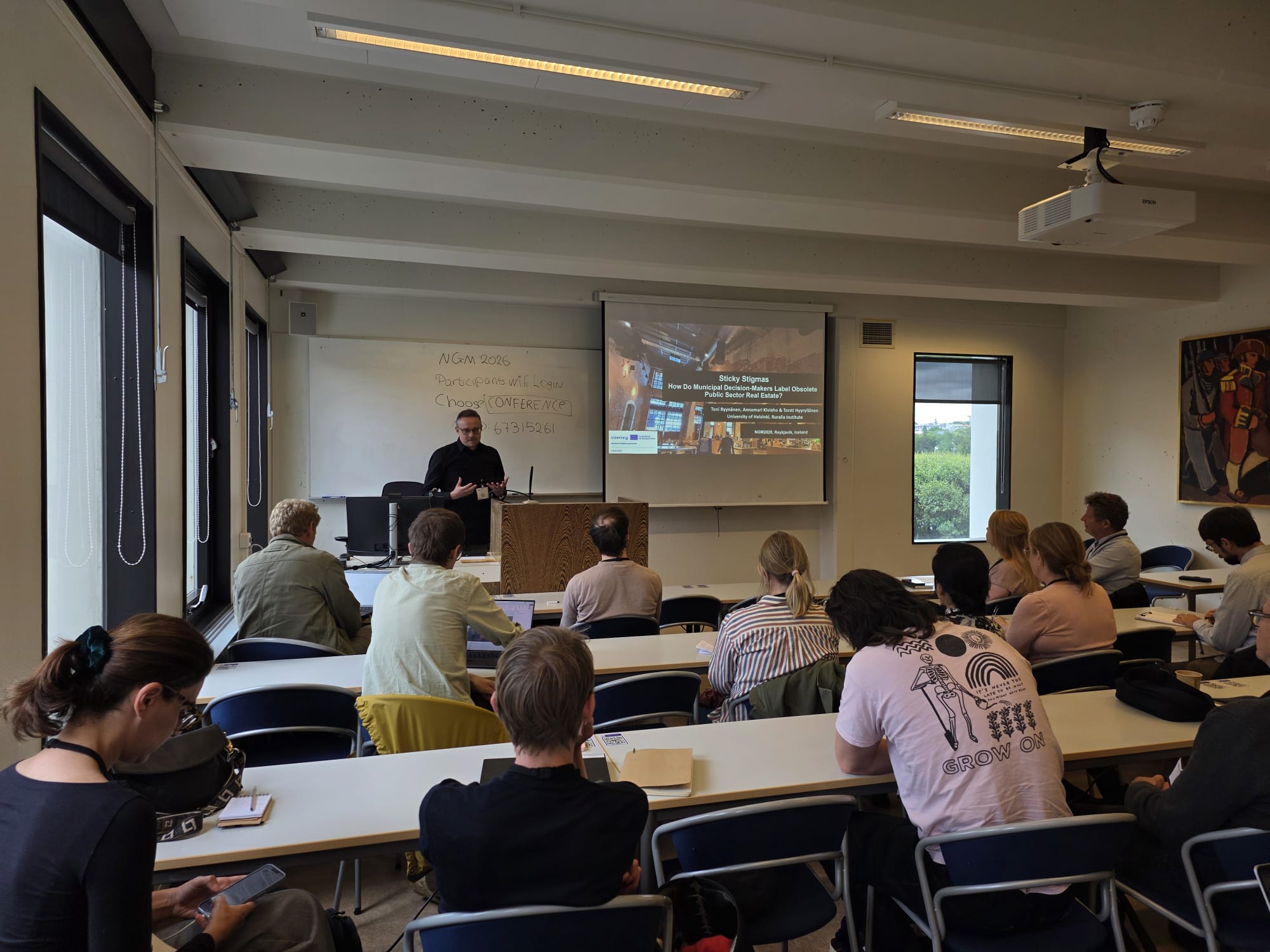
Toni presented Sticky Stigmas – How Do Municipal Decision-Makers Label Obsolete Public Sector Real Estate? The research was undertaken with Annamari Kiviaho and Torsti Hyyryläinen from the University of Helsinki’s Ruralia Institute.
The study examined how municipal decision-makers describe and categorise vacant or obsolete public buildings. Based on 12 semi-structured interviews with representatives from three South Savo municipalities, it found that municipal property portfolios are often divided between buildings viewed as desirable and those considered difficult, problematic or “haunted”.
Properties can become stigmatised because of their location, external appearance, structural condition, history or established local reputation. These perceptions can influence decisions about whether a property should be renovated, repurposed, concealed, subdivided or demolished.
The research also identified practical approaches used by municipalities to address these stigmas. These include improving building façades, covering the windows of unused properties and dividing large institutional buildings, such as former schools and industrial facilities, into smaller spaces that may be more attractive to prospective users.
By applying the theory of stigmatisation to buildings and the wider built environment, the study provides a new framework for understanding why some obsolete public properties are particularly difficult to bring back into use.
Together, the two presentations highlighted the complex relationship between demographic change, local housing markets, municipal decision-making and the management of public real estate. The research provides valuable evidence to support more sustainable and place-sensitive responses to vacant and underused buildings in rural and shrinking regions.