
NACEMAP Pilot 2 helps communities to prepare for flooding and oil spill incidents
Flooding and oil spill scenarios were in focus of the NACEMAP Pilot 2 exercise in Limerick, Ireland, in the end of October. The one-day event helped to evaluate and develop the tools created to support community preparedness.

The second NACEMAP Pilot exercise brought together practitioners from several sectors of Ireland's emergency management community. Local councils, police and fire services, government and statutory agencies, the military and NGOs were represented.
The aim of the pilot was to identify where existing emergency response structures may have limitations in reaching and supporting communities, and how the tools developed in the NACEMAP project could help to address these gaps. It was also an opportunity to explore how the different organisations engage with and support local communities, particularly in helping people to prepare for, respond to and recover from incidents.
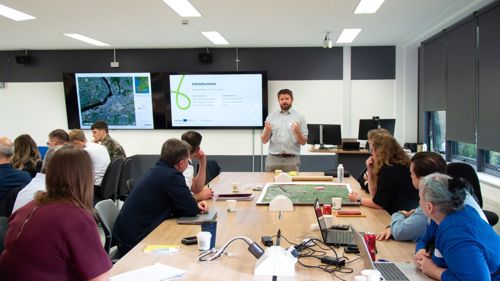
The pilot began with an incident management exercise centred around a complex emergency scenario, combining a severe oil spill in the River Shannon with a major storm event and associated flooding. Participants were asked to consider how their respective organisations would respond as the incident developed, exploring the challenges and opportunities associated with interagency coordination, communication, resource management, the allocation of roles and responsibilities, and the transition towards longer-term community recovery.
Following the exercise, participants were introduced to the second iteration of the NACEMAP tools, which had been revised following the feedback from the stakeholder workshop in August. Participants were invited to review the updated tools, considering how they could have been applied during the simulated incident, where they could provide practical value to communities, and which aspects could be improved to make them more useful.
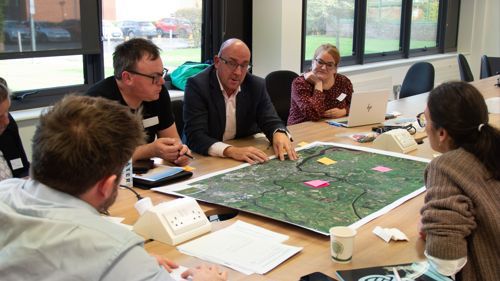
In general, the practitioners found all five tools relevant and useful. Many of them could possibly use some of the finalized tools in their everyday work. The participants also emphasised the importance of mobilising communities for preparedness work.
“We had a very insightful tabletop exercise, as well as piloting tools to help communities become better prepared for emergencies. The focus on an oil spill incident during a flood presented a mix of challenges to the responders taking part. We are proceeding now to incorporate the feedback into the next version of our tools, in preparation for the next pilot exercise, to be held in Akureyri, Iceland in 2027.” commented the event organiser, Kevin Fitzgibbon of the National Maritime College of Ireland at MTU.
Through the event, the project team gained also new ideas for a webinar series starting in spring 2027, focusing on preparedness and emergency management from the community perspective.
The event was organised on 28 October 2026 in Limerick, Ireland, and hosted by Munster Technological University (MTU), in collaboration with Ambipar Response. The project partners from Laurea University of Applied Sciences (LAU), University of Akureyri (UNAK), Finnish National Rescue Association (SPEK), and The Association of Municipalities of Northeast Iceland (SSNE) supported the organisers.
