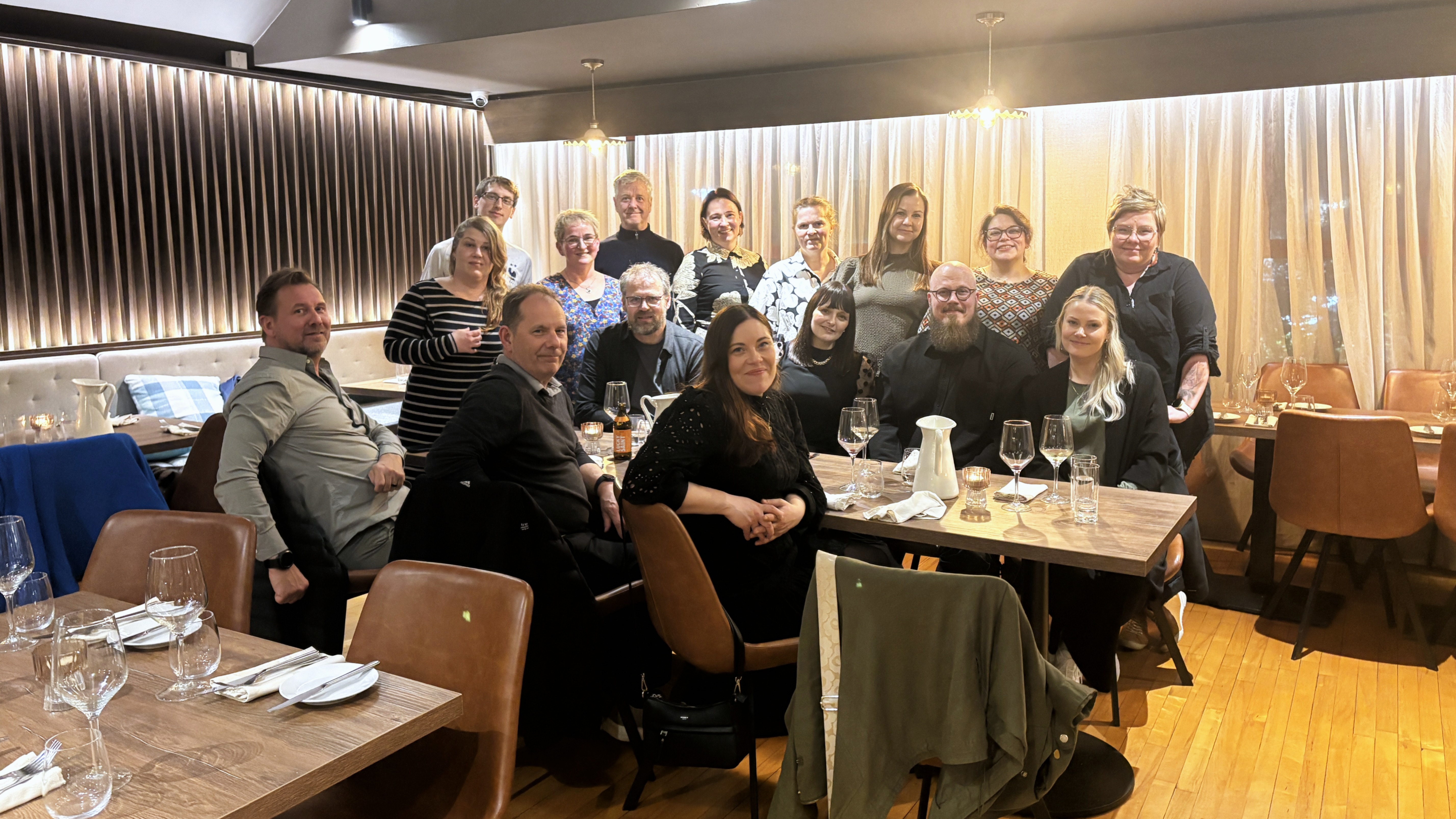
Partner Meeting in Ireland strengthened international collaboration
Partners and associated partners of the RemoTED project gathered in April in Letterkenny, Ireland where the WiSAR Lab and Technology Gateway at Atlantic Technological University (ATU) hosted the meeting at the CoLab Innovation Centre.

Photo: From left to right: Nick Timmons (ATU), Fiona Barrett (ATU), Steinunn Ólafsdóttir (University of Iceland), Rune Pedersen (Norwegian Centre for E-health Research), Karla Muñoz Esquivel (ATU), Ove Lintvedt (Norwegian Centre for E-health Research), Susanna Leskinen (Lapland UAS), Jaana Kurki (Karelia UAS), Sanna Ahponen-Käyhkö (Karelia UAS), Suvi Leppänen (Karelia UAS), Henri Perälä (Lapland UAS), Mira Koskenniska (Lapland UAS). Not pictured: Leila Nisula (Lapland UAS) and Louise McBride (ATU).
During the two-day meeting, we updated the project status, agreed on next steps, shared learning experiences, and further strengthened our collaboration through in-person discussions.
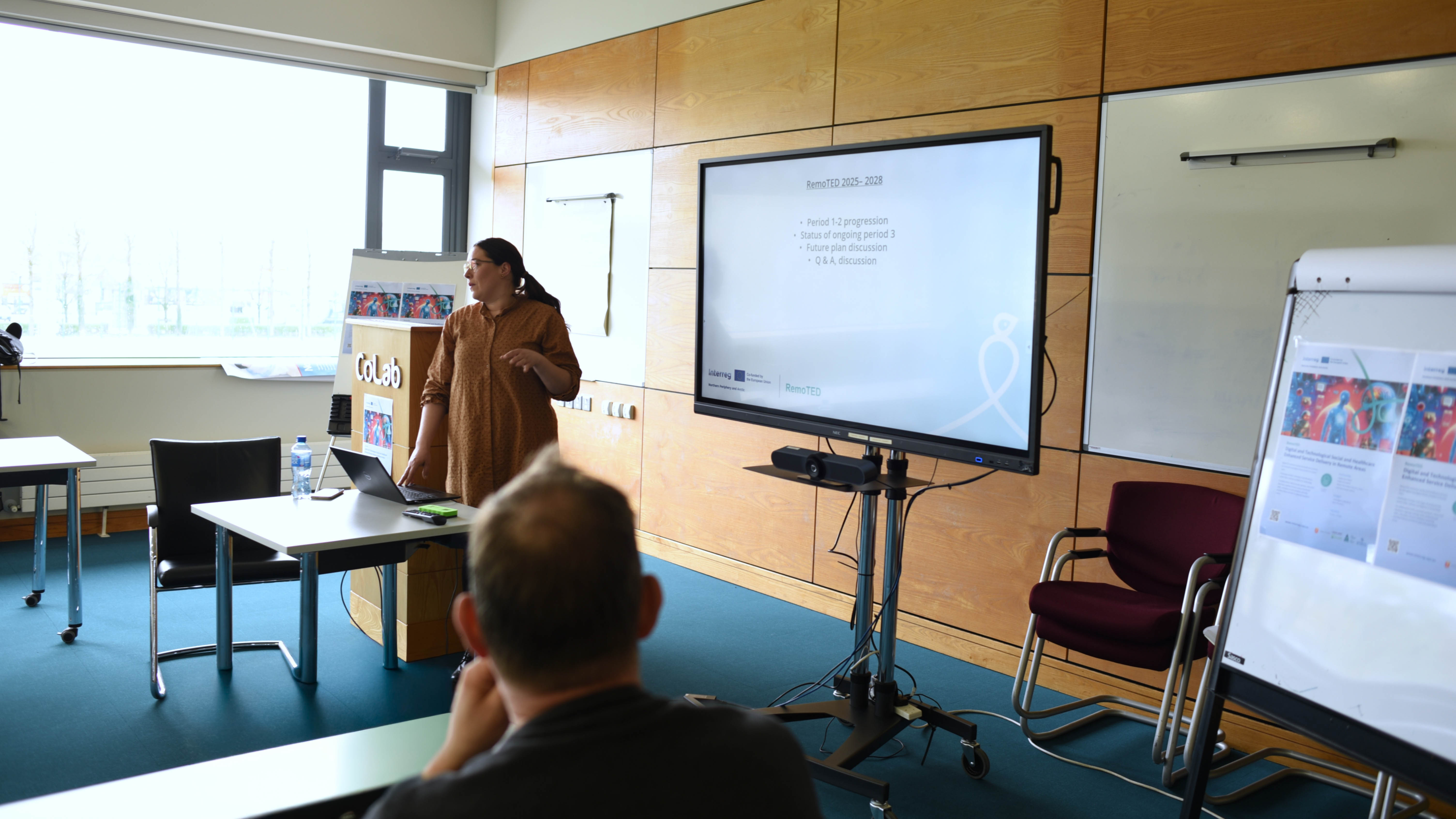
Photo: Project Manager Susanna Leskinen presenting the project status.
As part of the meeting, a workshop focusing on AI competences and the implementation of new technologies was organised. The workshop also addressed the development of digital skills training in the health and social care sector. It was delivered by experts from the Norwegian Centre for E-health Research, Dr Ove Lintvedt and Professor Rune Pedersen. The Norwegian experts provided practical examples and tools on how digital services can be implemented in everyday practice and how staff competences can be strengthened. The discussion highlighted both shared challenges and different national perspectives. The workshop also supported stronger engagement of partners and the consortium in the implementation of upcoming actions, particularly in relation to continuous learning and technology piloting.
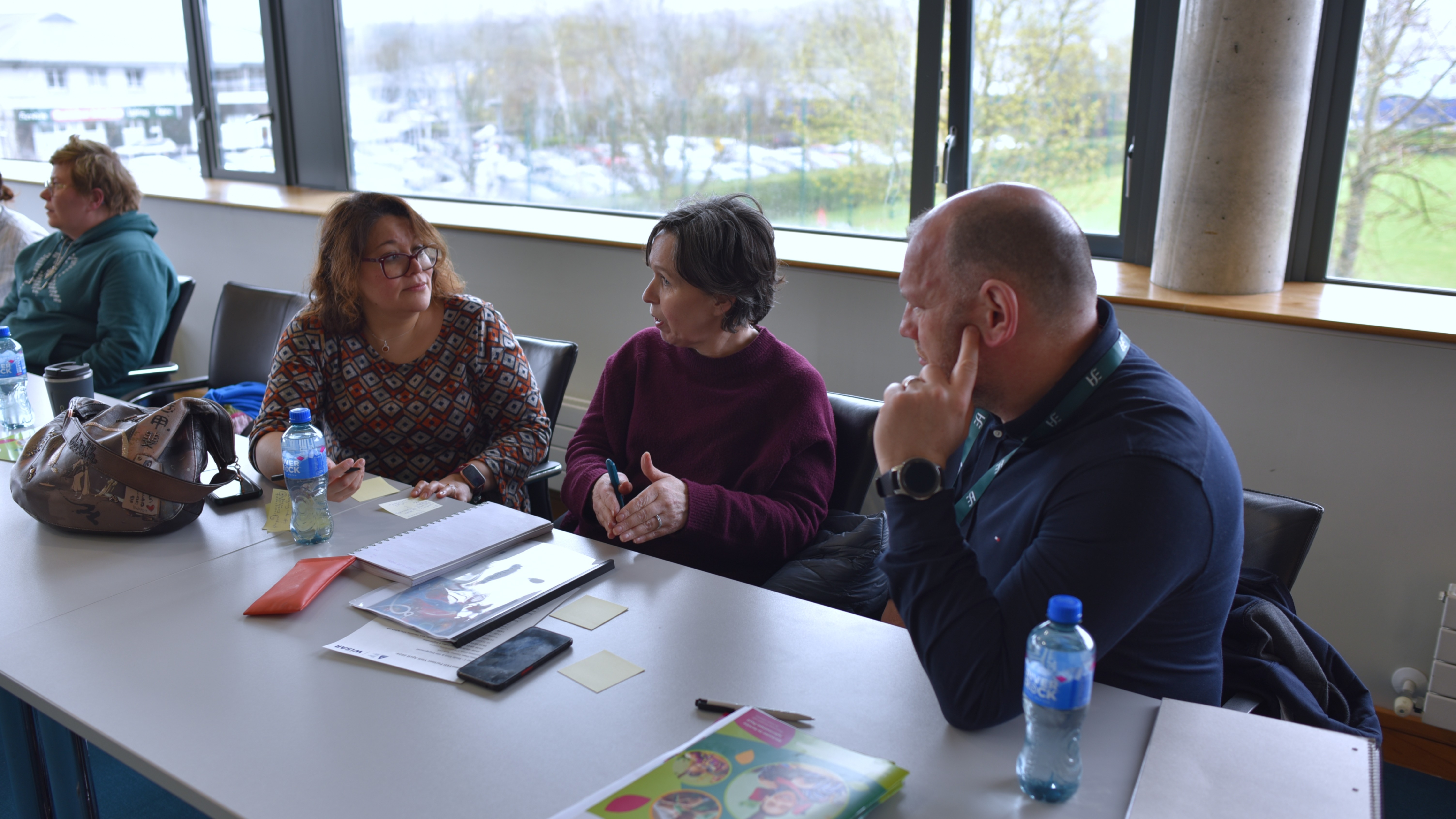
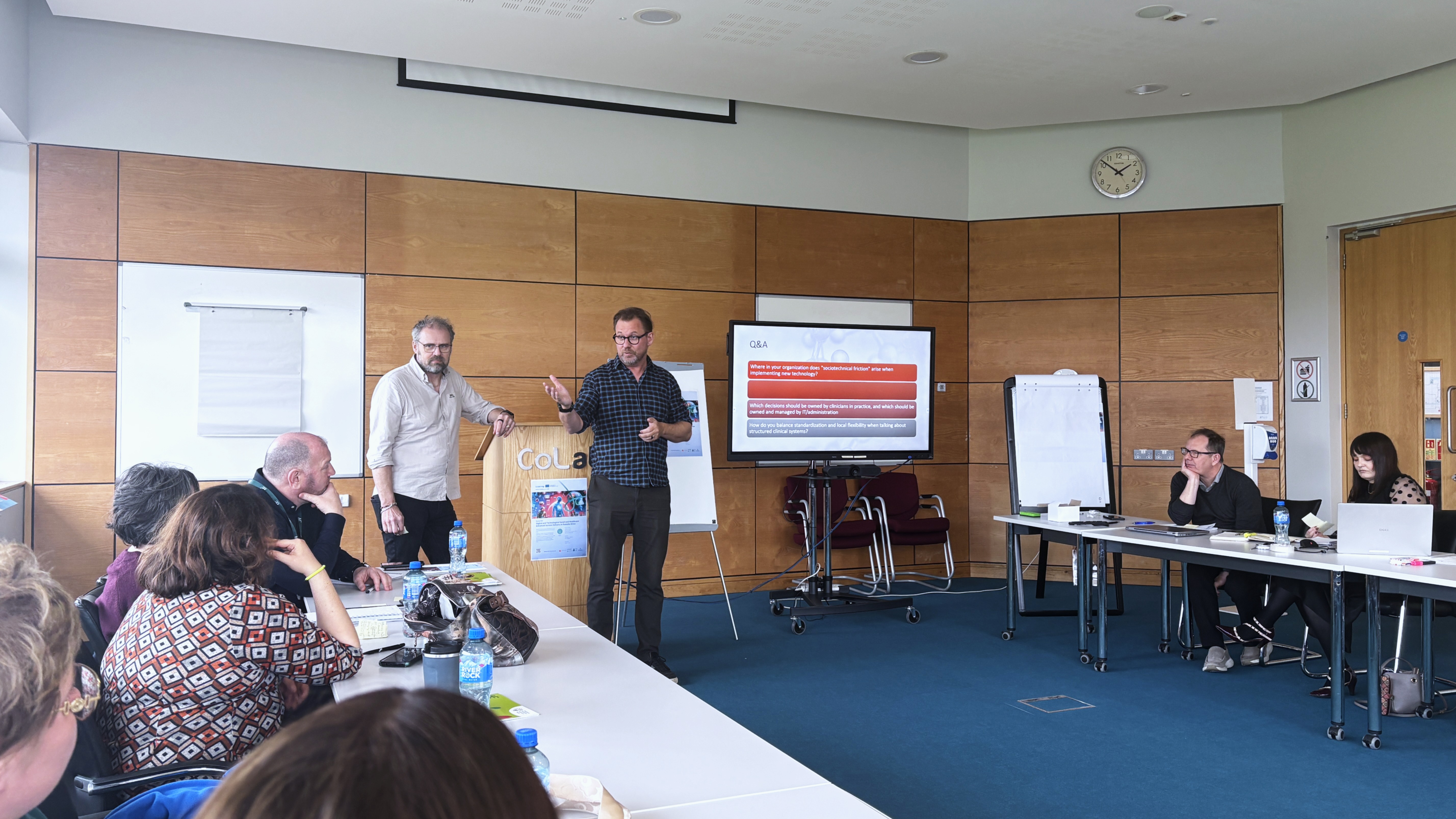
Photos: Ove Lintvedt and Rune Pedersen from the Norwegian Centre for E-health Research facilitating the workshop.
During the visit, the Interreg Europe HUMAN project by ERNAC was presented by the Project Officer Michael McBride. The HUMAN project provides examples of how technology can be used to promote more inclusive and accessible healthcare. The presentation offered valuable insights and aligned well with the objectives of the RemoTED project.
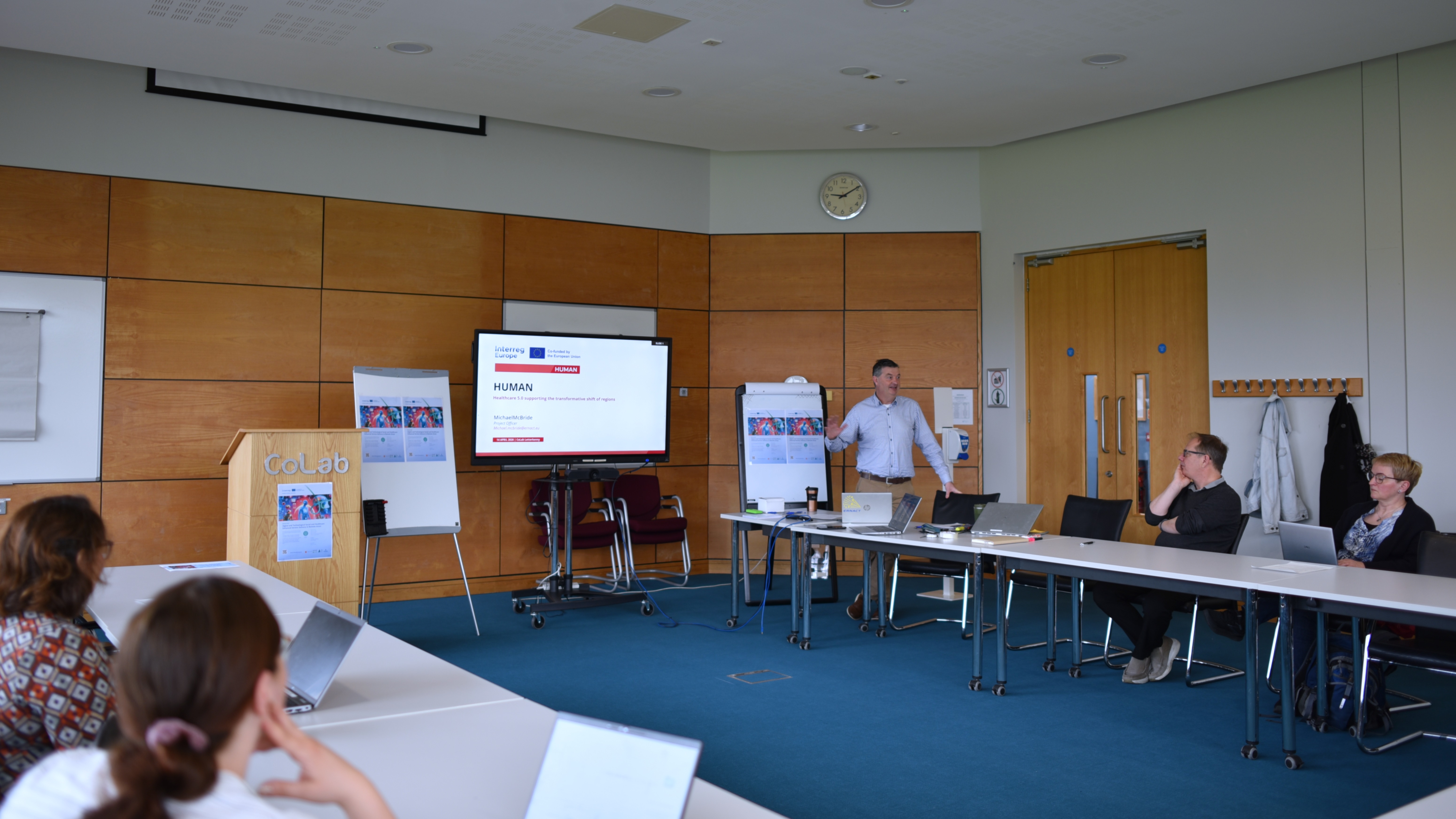
Photo: Michael McBride presenting the HUMAN project.
The programme also included a visit to the Children’s Disability Network Team (CDNT) Inishowen unit in Buncrana, County Donegal, where we had the opportunity to learn about services for children and families in practice. The visit provided valuable insight into how services are delivered at the local level.
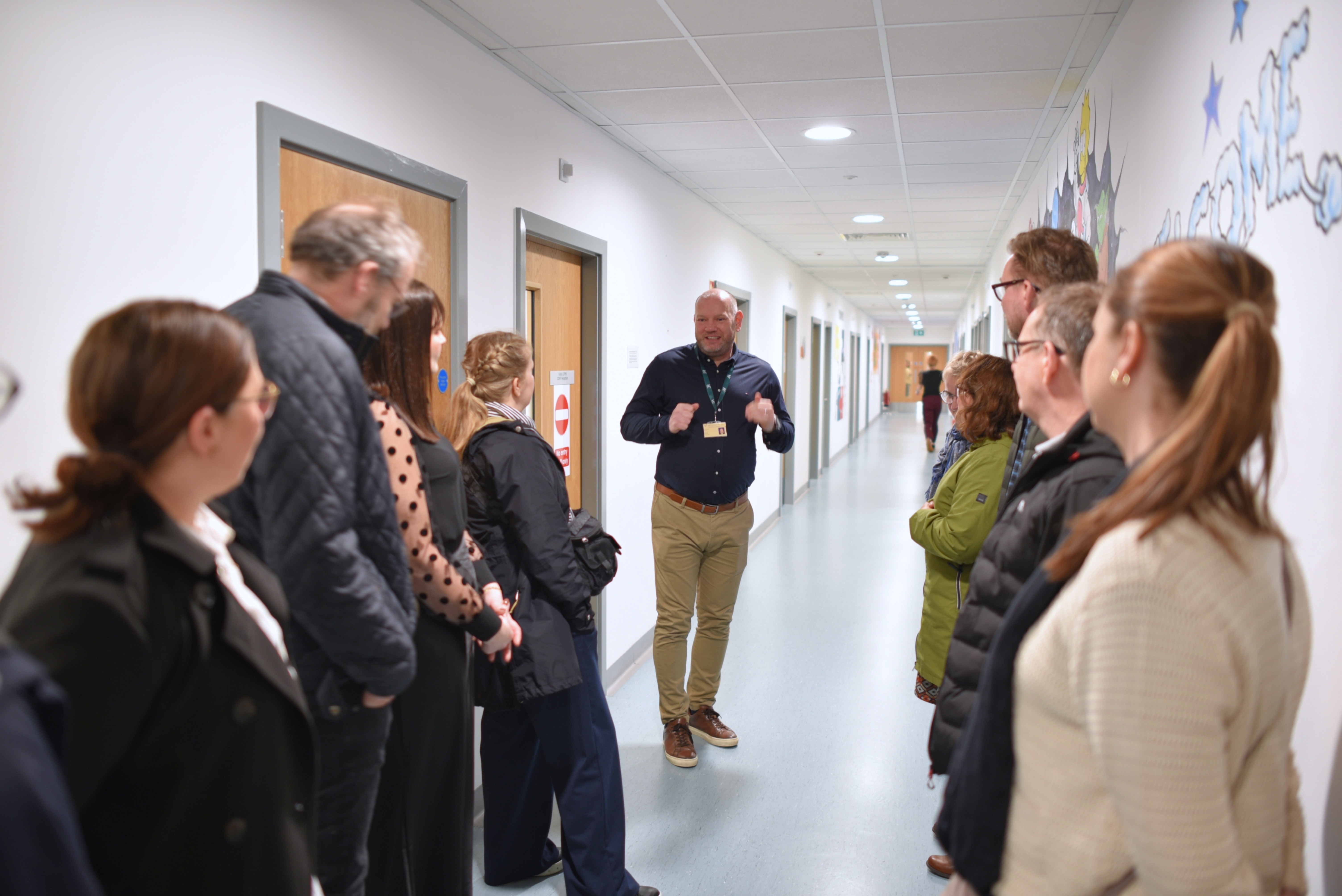
Photo: Alvin Doherty presenting the CDNT services.
CDNT provides multidisciplinary support services for children aged 0–18 with complex needs arising from disabilities or developmental disorders, such as autism, intellectual disabilities, physical disabilities, or sensory impairments. The services focus on children whose needs are extensive and significantly impact their daily lives. The team includes occupational therapists, physiotherapists, speech and language therapists, psychologists, and social workers. Services are family-centred and include individual support plans, therapy, parental guidance, and support for the child’s development and participation in everyday life at home, in early education, and at school.
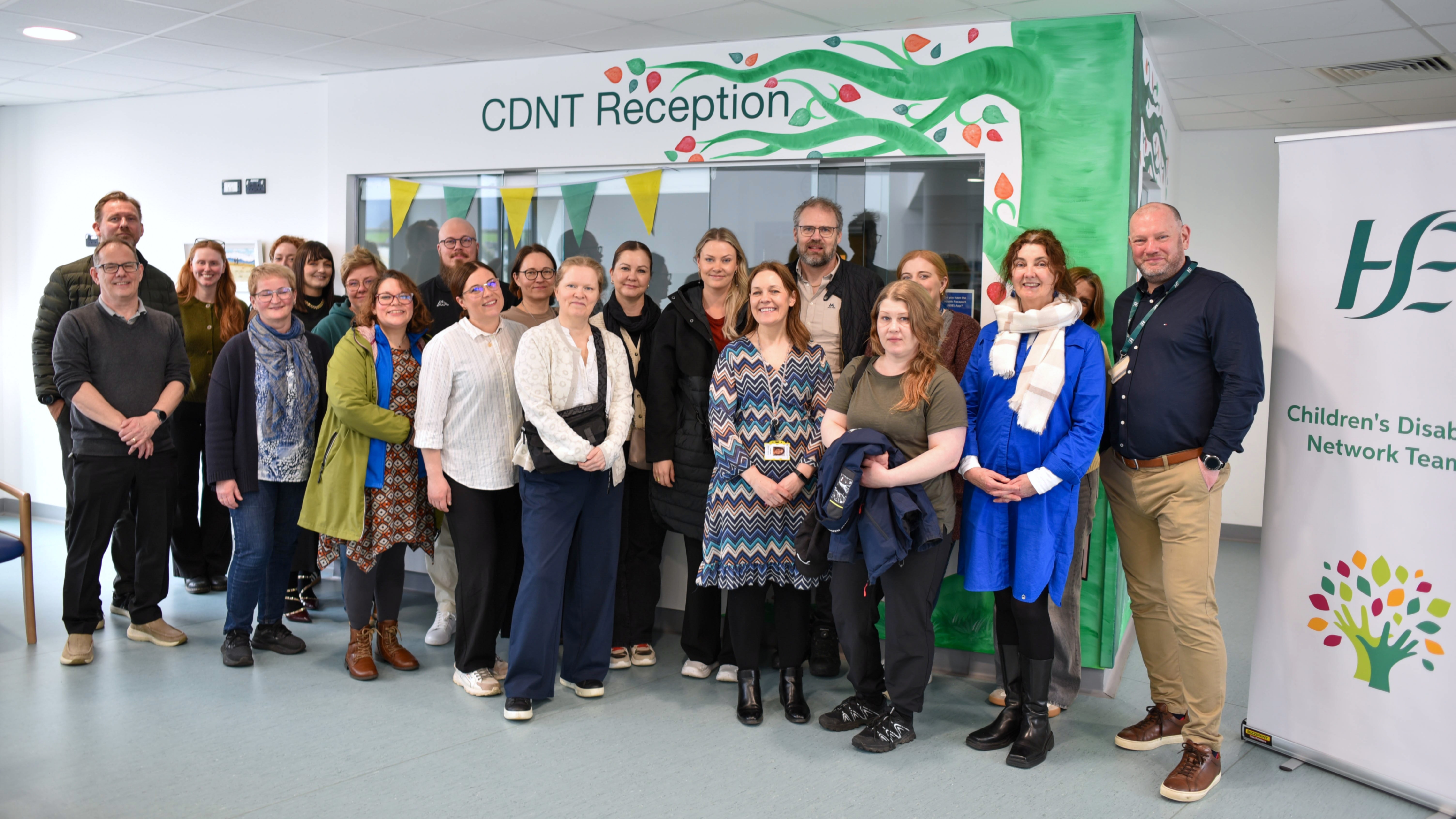
Photo: RemoTED consortium group photo with CDNT staff.
At the end of the partner meeting, we visited the WiSAR Lab research environment at ATU, where researcher Lucas Kupczik introduced ongoing research and development projects. The facilities included, for example, a testing environment designed to study the performance of antennas and sensors in interference-free conditions. The chamber enables research on welfare technologies and sensors that transmit data to receiving devices.
Under the guidance of Dr William Farrelly, we also had the opportunity to test a VR environment created by a doctoral researcher. The 365-degree virtual environment, based on Irish landscapes, had been developed to support the wellbeing of older adults in institutional care.
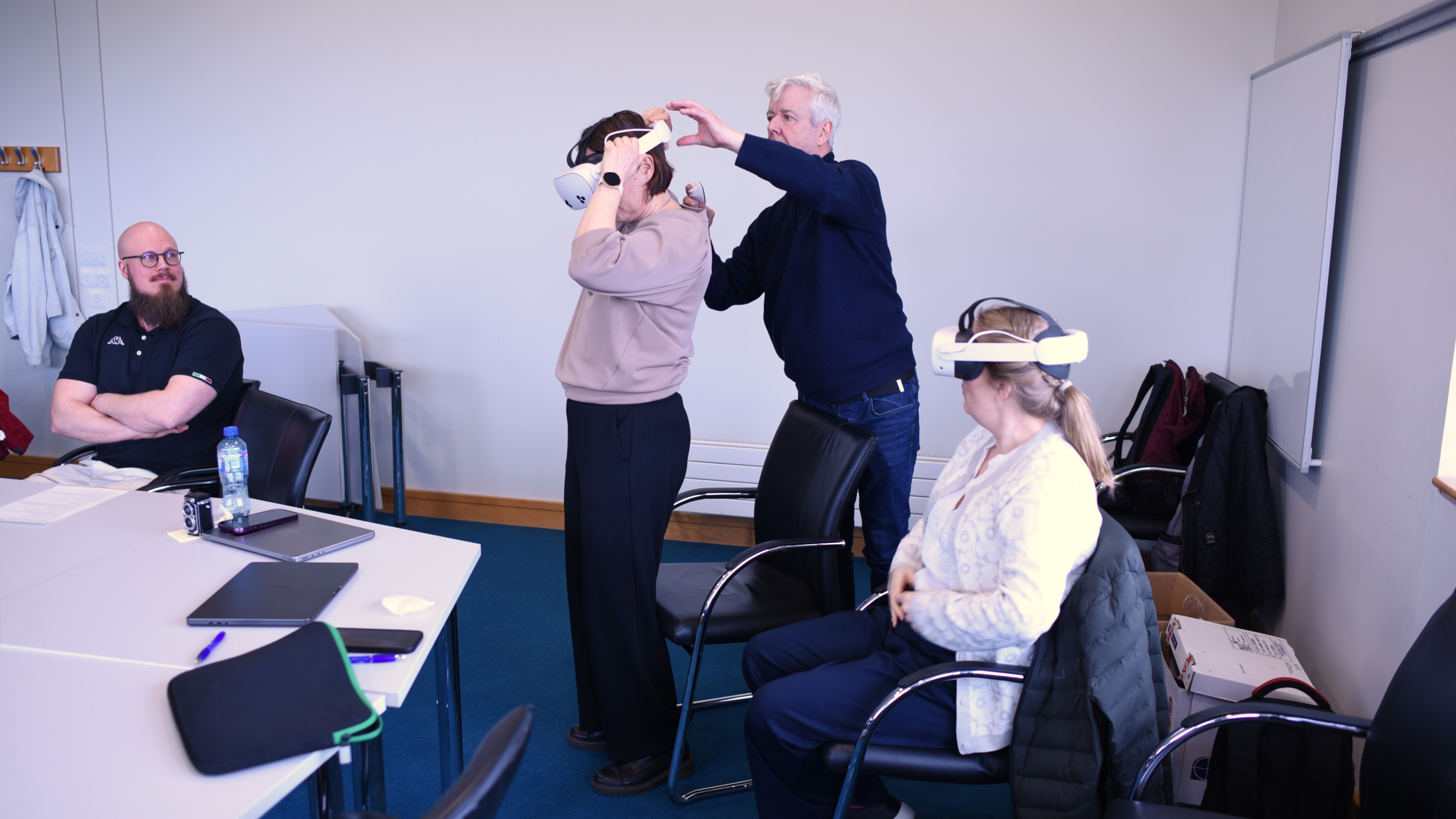
Photo: Project team testing VR equipment.
Overall, the visit to Ireland was highly successful. It strengthened collaboration within the consortium and enhanced cross-border cooperation. The involvement of associated partners was an important part of the meeting, supporting the implementation of project activities and contributing to the achievement of project objectives.
Alongside the formal programme, we also had the opportunity to experience local culture and landscapes. We travelled together by bus from Dublin to Letterkenny and back. This was a conscious choice, as we aim to consider sustainability and responsibility in our project practices. During the visit, we also explored the city of Dublin. Spring in Ireland was already well underway, with cherry blossoms in bloom and the green landscapes hinting at the approaching summer.
Warm thanks to Atlantic Technological University for the excellent hosting and arrangements!