MINDSET Impact Pathway: Sustainable Solutions for Vacant and Deteriorating Buildings
Through MINDSET, the University of Helsinki is working with Juva, Kangasniemi and Pieksämäki in Finland’s South-Savo region to explore sustainable solutions for vacant and deteriorating publicly owned buildings.

As populations decline and service needs change, municipalities face difficult decisions about schools, housing and other properties that are no longer fully used. The mission aims to bring together municipal knowledge, community perspectives and circular economy practices to support informed, sustainable and financially realistic decisions.
Short-term outputs: Building knowledge and exploring solutions
The mission aims to develop practical resources that help municipalities assess vacant properties and identify appropriate courses of action. These may include examples of successful building reuse, guidance on sustainable demolition and information on recovering construction materials.
Workshops and local discussions will explore the types of spaces needed by residents, associations and businesses. This will provide insight into which buildings communities value and how they might be used.
Potential digital solutions include a participatory map for identifying important properties and a material bank connecting reusable components with potential users. Pre-demolition assessments may also highlight materials suitable for recovery.
Medium-term outcomes: Supporting better decisions
The knowledge and community input gathered will help municipalities make more informed decisions about maintaining, repurposing or demolishing vacant buildings. It is also expected to encourage a more systematic approach to property management and greater consideration of reuse and material recovery.
Identifying local needs and potential uses may reveal practical new purposes for suitable properties or alternative premises for community activities. The mission also has the potential to strengthen cooperation among municipalities, residents, property owners, businesses and organisations involved in construction, demolition and the circular economy.
Long-term impact: More sustainable and attractive places
Over time, the mission is expected to improve how the built environment is managed while reducing the financial and environmental costs associated with vacant properties.
Extending the life of suitable buildings, recovering construction materials and adopting more sustainable demolition practices can reduce waste and carbon emissions. Together, these changes would contribute to more attractive communities, create opportunities for circular economy businesses and ensure local needs are better reflected in property decisions.
Sharing approaches across regions
The experience of the three municipalities could provide useful examples for other areas facing population decline, weak property markets and growing numbers of vacant buildings. Good-practice guidance, community participation methods and potential digital tools could be adapted elsewhere in Finland and across the Northern Periphery and Arctic area, according to local needs and resources.
Embedding learning beyond MINDSET
The mission aims to generate knowledge and practices that municipalities can continue using alongside their property strategies, climate programmes and everyday decision-making. Further initiatives and follow-up projects could build on this work. Potential investment opportunities may emerge in material recovery, reuse services and digital material marketplaces, although these have yet to be assessed.
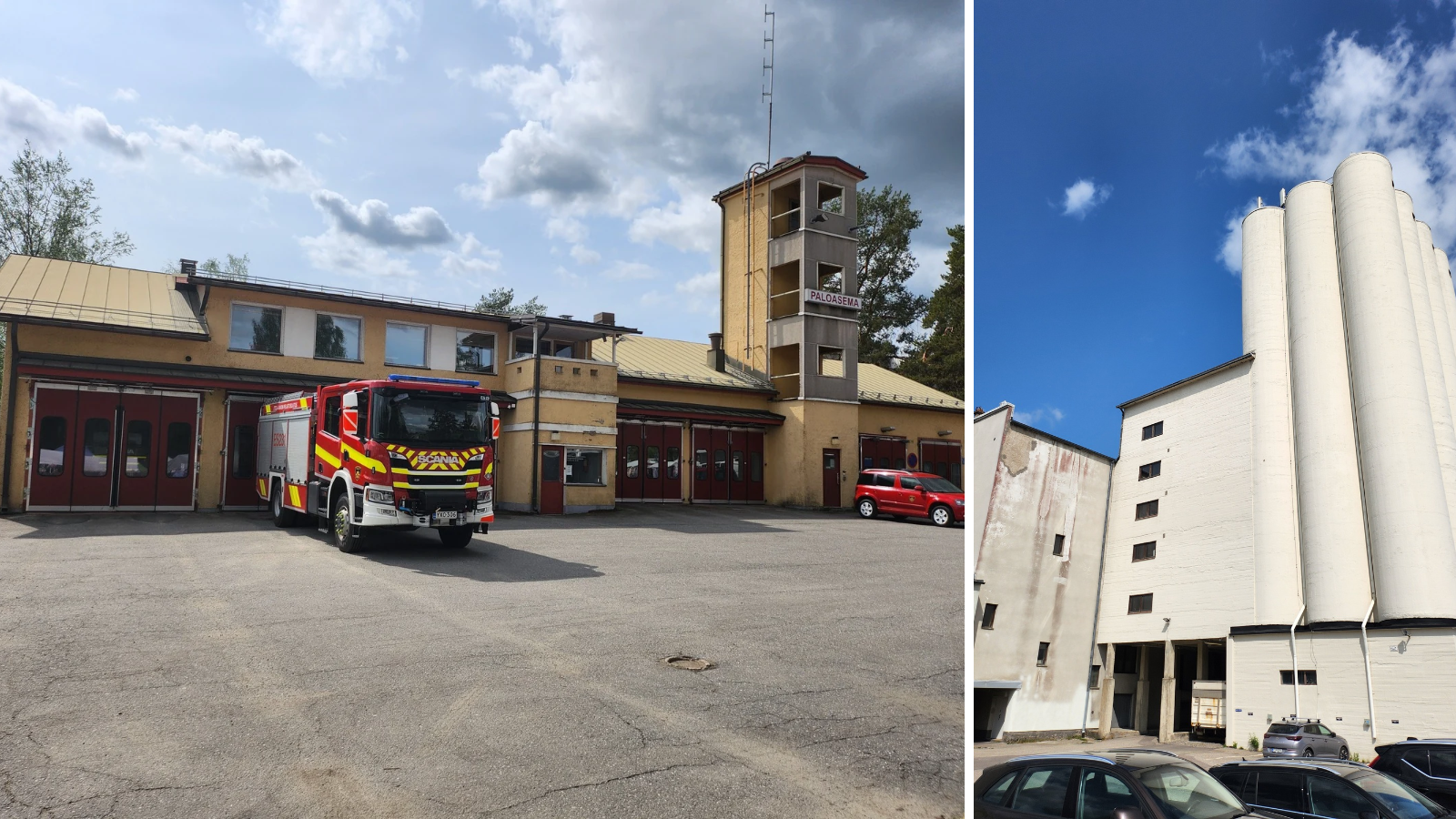
PICTURED: Local buildings illustrate the challenge
Examples from Pieksämäki and Kangasniemi highlight the different considerations involved in finding new uses for existing buildings. In Pieksämäki, old grain silos are important town landmarks, but identifying suitable new uses for them remains challenging.
In Kangasniemi, a large former school building is temporarily accommodating youth activities and providing storage space, while its longer-term use remains an open question. The municipality’s fire station presents another challenge, as it is difficult to adapt for alternative uses.
These examples illustrate why the mission brings together municipal knowledge, community perspectives and circular economy practices to explore practical, sustainable options for each building.