
Youth in the spotlight – from engagement to leading roles
Young people are often asked for their views, but are rarely included in discussions about long-term plans - and even less often seen at decision-making tables. Yet across the Northern Periphery and Arctic, their perspectives and participation are essential. Interreg NPA and Youth Together for Arctic Futures (a project led by WWF Global Arctic Programme, co-funded by the European Union and Global Affairs Canada) recognise this gap and are exploring practical ways to support young people in driving change.

Do young people have enough opportunities to influence the decisions and developments that will shape the future of their communities?
Population decline, climate change, biodiversity loss, pressure on local livelihoods, and the challenge of creating attractive places to live are just some of the issues communities across rural, peripheral and Arctic regions are facing. Young people are not only affected by these issues, they will also play a key role in shaping the future of these places.
At the same time, many young people leave their home regions in search of education, work opportunities, or the possibility to build their future elsewhere. This raises an important question: do young people have enough opportunities to influence the decisions and developments that will shape the future of their communities?
Interreg NPA and Youth Together for Arctic Futures are working to support young people in finding solutions to these challenges. The approach of Youth Together for Arctic Futures is clear: “We want to give Arctic youth platforms and means to influence decisions affecting their home” says Sissa Palmquist, the project manager from WWF’s Global Arctic Programme. “If these challenges are to be addressed” adds Lucia Brhlíková, Youth Engagement Officer at the Interreg NPA programme, “young people need to be given space and support to co-create solutions that meet their needs in their communities.”
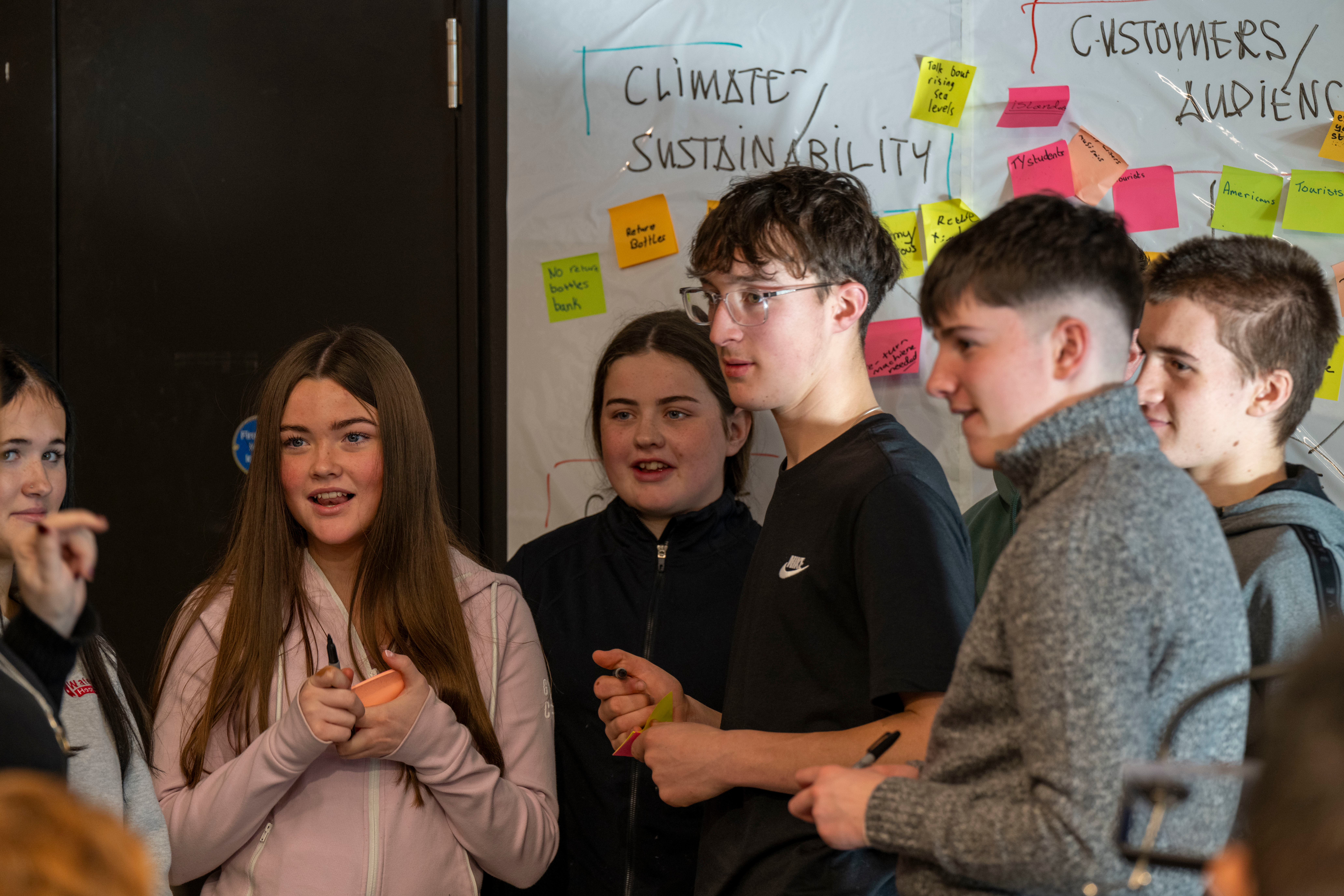
Fourteen students from Inis Oírr (Inisheer), Ireland, took part in a workshop to develop ideas for a youth-led literary tourism initiative. Their concepts included Irish-language storytelling videos with English subtitles highlighting the island’s oral traditions. (Photo Interreg NPA N-LITE project)
From participation to influence
Both Lucia and Sissa point to the same gap: the lack of models for meaningful youth engagement.
“There is no question that youth have the interest and ambition to engage,” says Sissa. “But institutions struggle to find ways to include young people meaningfully in important processes.”
Too often, she says, young people are either excluded from key decision-making spaces or invited into processes not designed with youth-realities in mind.
Interreg NPA has been testing ways to change this from within its own governance structures. Lucia explains that the programme invited two transnational youth organisations to sit as observers in Monitoring Committee meetings.
“We are hoping to give young people a seat at the decision-making table and voice their perspectives,” she says. The aim is even broader: to encourage NPA-funded projects themselves to think more seriously about involving young people in workshops, events, project partnerships or decision-making bodies.
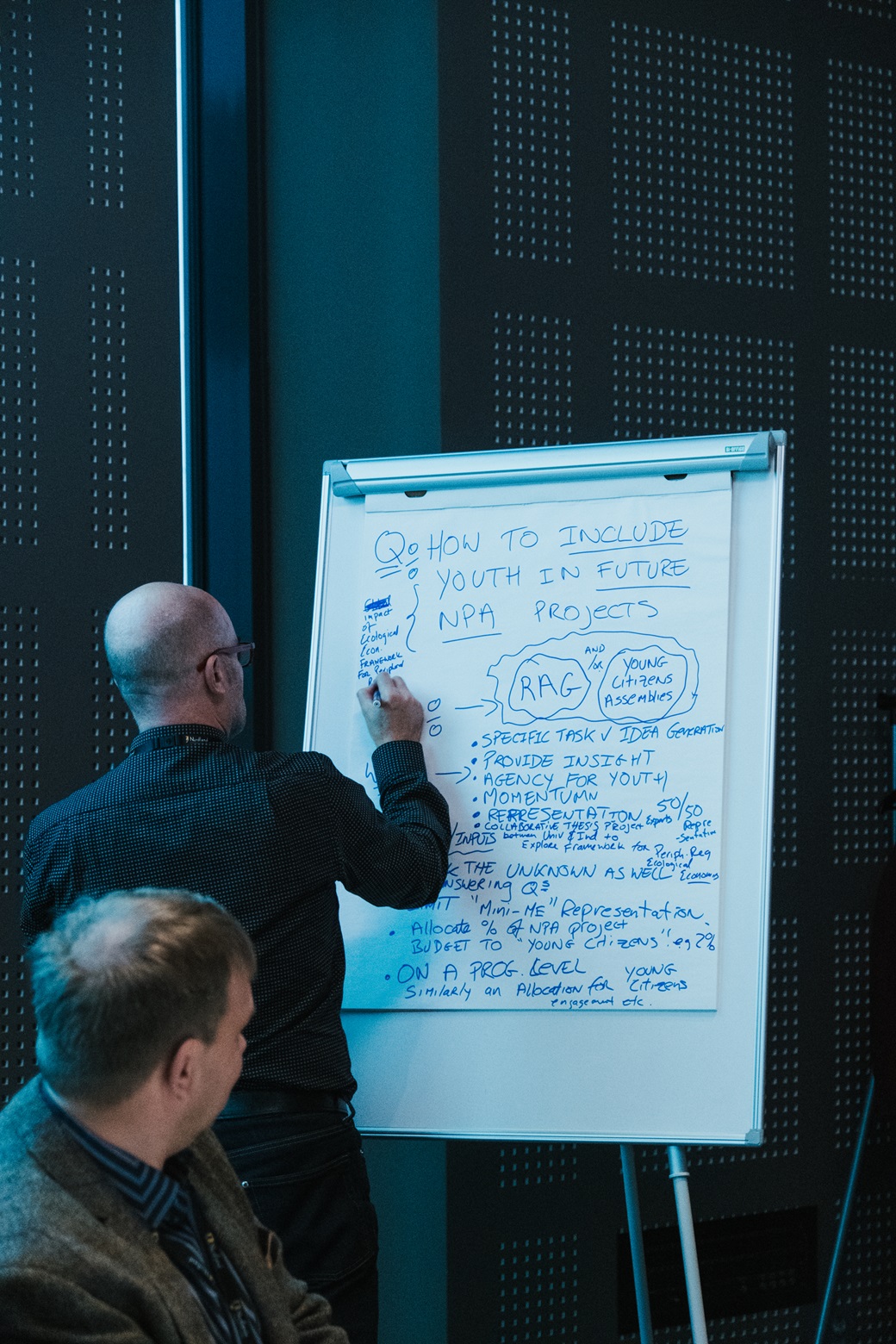
The Youth in the NPA conference in 2022 marked the beginning of the programme's youth engagement process. Bringing together ideas from across generations and more prominently from young people, it set the stage for a more includes and youth-centred programme. (Photo Interreg NPA )
Turning youth recommendations into action
Another example of structured youth input has come through the Arctic Youth Dialogue, an EU initiative under the EU Arctic Policy, to which Youth Together for Arctic Futures is a major contributor.
The Dialogue brings together more than 30 young people from across the Arctic and Europe to develop policy recommendations for Arctic actors, including the EU.
At last year’s Arctic Youth Dialogue, youth called for Arctic decision-making to centre around the rights, needs, and wellbeing of Arctic and Indigenous communities, while strengthening environmental protection and supporting Indigenous led stewardship of land and sea. They also wanted a more sustainable, locally anchored infrastructure that could boost youth and Indigenous led entrepreneurship. They also pushed for more accessible and culturally grounded funding mechanisms, and a shift toward responsible consumption within planetary boundaries. - Policy recommendations from the 2025 Arctic Youth Dialogue - WWF Arctic
At the Interreg NPA, these recommendations were carefully considered. Lucia shares that “after reviewing the recommendations, we concluded that some are aimed at governments or EU institutions, but many also align closely with what transnational cooperation projects can deliver.”
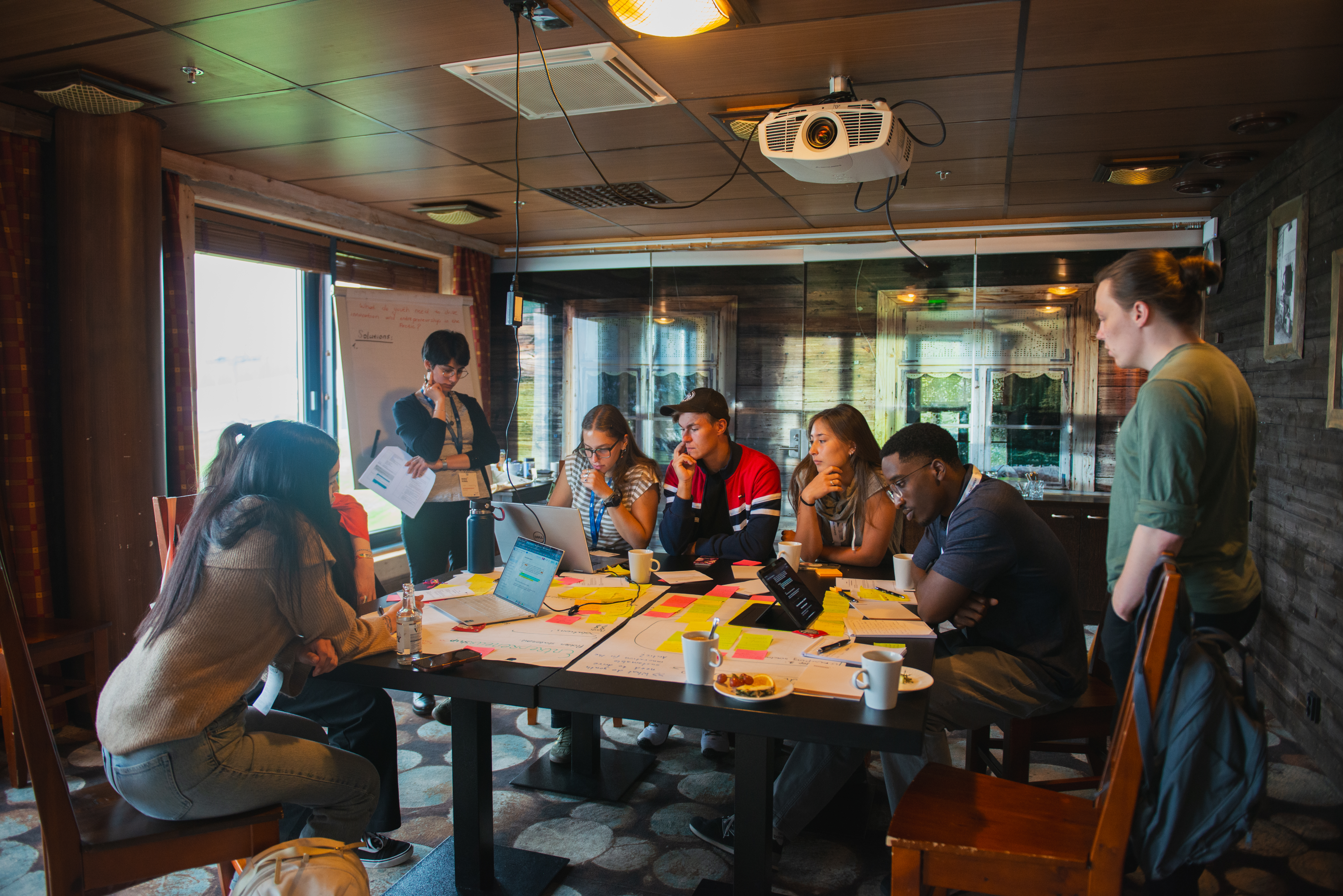
The Arctic Youth Dialogue is a platform aimed at fostering dialogue, understanding, and cooperation among young people interested in the Arctic region. This initiative gathers about 35 youth from diverse backgrounds across Europe and the Arctic states to exchange ideas, perspectives, and experiences on Arctic topics. (Photo: Youth Together for Arctic Futures)
A new youth call
That reflection has helped shape the first Interreg NPA Youth Call, opening in June.
Rather than seeing young people only as participants, the call was shaped starting from their input collected through a survey. It aims to support them as project leaders and decision-makers.
“With the Youth Call we want to shift the perspective and give young people more responsibilities and a stronger voice in shaping their communities,” says Lucia. “We have designed the call with a simpler and more inclusive model, with flexible duration, pre-payments and simpler reporting”.
“If youth is to deliver meaningful change, they need to be involved in all stages of the process,” Lucia says. “This means deciding what the project should be about, who will be involved, and what activities it will carry out.”
For Sissa, seeing youth recommendations reflected in a funding call “shows Arctic youth that their voices aren’t just being heard, they’re being taken seriously”.
She adds: “It also turns youth advocacy into something tangible, creating clear and accessible ways for young people to actively shape and move forward the future they envision for the Arctic.”
If youth is to deliver meaningful change, they need to be involved in all stages of the process.
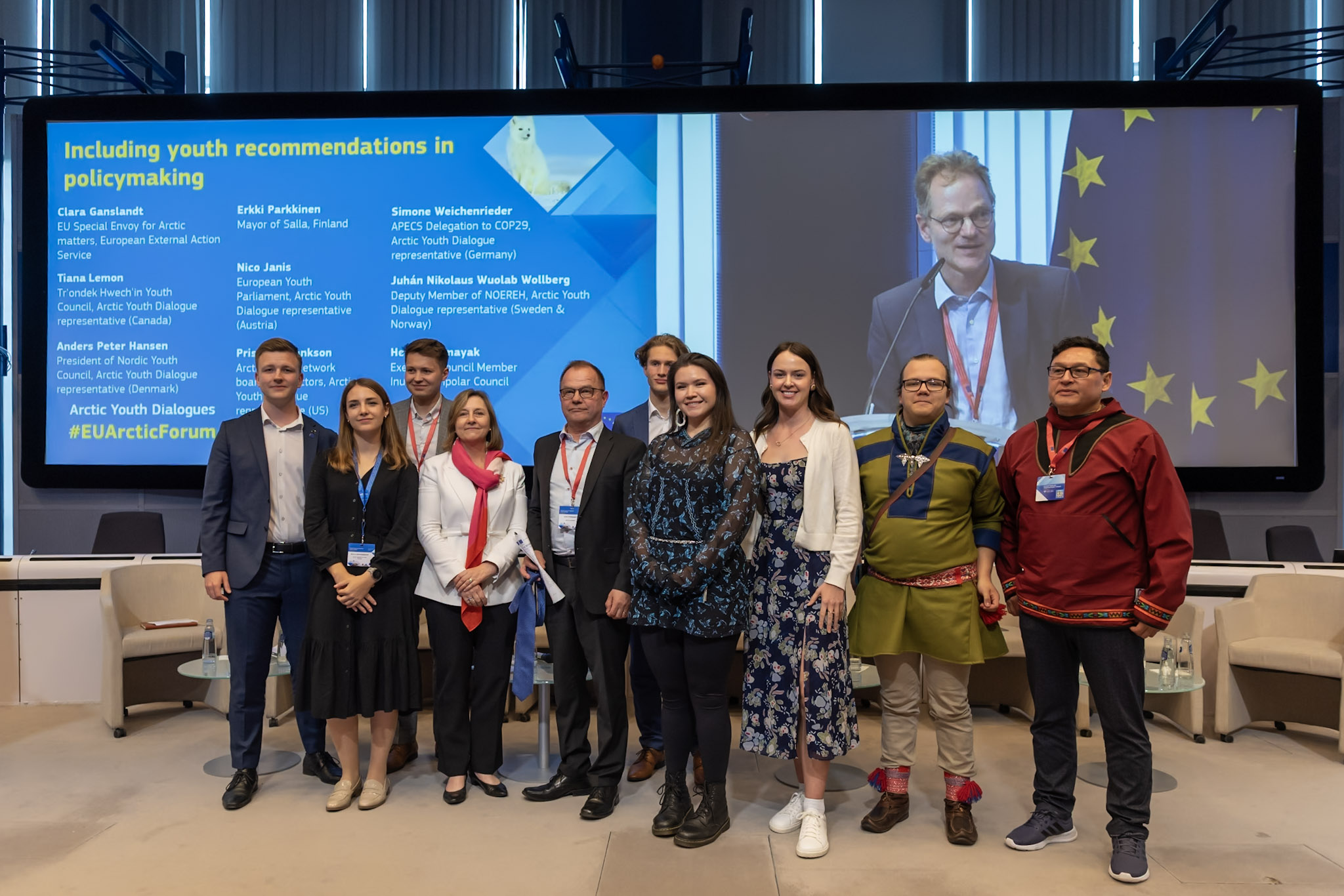
Arctic Youth Dialogue representatives presented their recommendations at the EU Arctic Forum 2024 in a panel with Ms Clara Ganslandt, former EU Special Envoy for Arctic matters, and Mr Erri Parkinnen, Mayor of Salla (Finland) member of the Arctic Mayors Forum. (Photo: Youth Together for Arctic Futures)
Looking ahead
Youth Together for Arctic Futures recently closed a call designed to support youth across the Arctic.
According to Sissa, what stood out most were the community‑driven initiatives to safeguard marine environments that their communities depend on, and the leadership demonstrated by Indigenous youth.
“Many applications also highlighted youth led efforts to shape policy, showing a clear desire among young people to actively influence decisions that affect their communities and the future of the Arctic.
“And good news, Youth Together for Arctic Futures, will have a similar call out during the fall 2026,” Sissa adds.
Interreg NPA sees the momentum building and the first evidence of more youth involvement appearing. “We are happy to see that many Interreg NPA projects follow our footsteps and include young people more in their activities and partnership,” says Lucia. She hopes to see even more young people involved in projects, more youth organisations discovering Interreg NPA, and continued youth representation at the programme level.
Sissa hopes that youth voices become institutionalised in all leadership spaces, “Success would mean that young people are a natural and visible part of leadership and decision-making, on all levels, across all priorities,” she says.
Your ideas matter, and you do not need to start alone
And for young people who are considering taking action, the message from Youth Together for Arctic Futures and Interreg NPA is clear: your ideas matter, and you do not need to start alone.
Dream big, advocate for change and support dialogue that accommodates collaborations across generations and cultures.” says Sissa. To which Lucia adds “you don’t need to start from scratch and do everything alone”, because one of the strengths of transnational cooperation is that “cooperation across countries connects you with other people who live similar experiences and share the same ambitions”.
Meaningful youth engagement is about being heard, to build the future together.
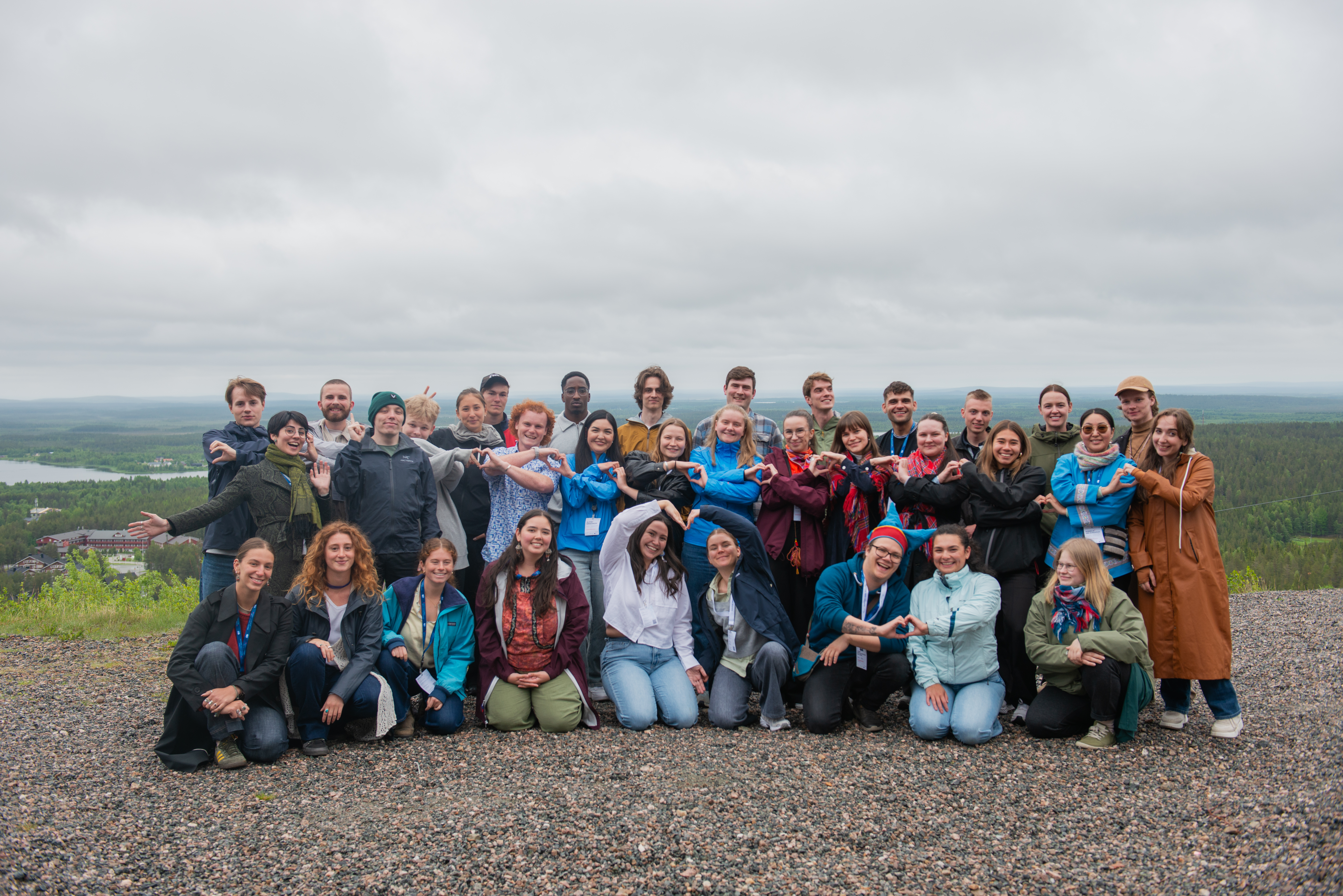
Group picture at the Arctic Youth Dialogue 2025. (Photo: Youth Together for Arctic Futures)
Youth Together for Arctic Futures
Youth Together for Arctic Futures is a four-year project that supports Arctic and European youth, between the ages 18-25, in developing the knowledge, skills, and opportunities needed to effectively advocate for climate and nature policies that matter to them in the Arctic. Launched in January 2024, the project empowers Arctic and European youth to become active citizens and decision-makers for a diverse, inclusive and sustainable Arctic. It connects youth through meaningful and respectful dialogue, capacity building and peer-to-peer learning, enabling them to collaborate on and establish the Arctic Youth Dialogue, as well as other local, regional, national and international activities.
The project is led by WWF’s Global Arctic Programme, which works towards a well-managed, biodiverse, and resilient Arctic, supporting healthy viable populations of wild species and benefiting the well-being of people in the Arctic and beyond, in which they are recognizing youth as a key enabler.
Sissa Palmquist is the project manager for Youth Together for Arctic Futures, co-funded by the European Union and Global Affairs Canada.
The project is implemented in collaboration with six key partners: the Saami Council, Association of Polar Early Career Scientists, European Youth Parliament, Arctic Mayors’ Forum, Tromsø Municipality, and the Arctic Youth Network.
Watch Youth Together for Arctic Futures at work in this video about the Arctic Youth Dialogue 2025.
