
PHESIA

Printed hybrid electronics for sustainable intelligent applications
What we do

The partners would like to develop a main project to solve the challenges related to lack of information on using novel technologies in key economic sectors. Lack of information is slowing down the exploitation of the technology in different applications. A main project can develop new technology’s reliability and quality, make processes more mature and produce new knowledge towards a cost-efficient, sustainable way of manufacturing electronics. The project will conclude with the main project application.

Why PHESIA

Manufacturing of food products and beverages, construction and education are all key growth sectors of the NPA area and there is a great deal of expertise in the region to solve the challenges related to lack of information on using novel technologies in those sectors.

Lack of information is slowing down the exploitation of the technology in different applications. The project will answer to the need to develop new technology’s reliability and quality, make processes more mature and produce new knowledge towards a cost-efficient, sustainable way of manufacturing electronics.

Printing electronics methods enable a new and more environmentally friendly way to manufacture electronics. There is a clear need to gather more information and expertise on the behaviour of materials in stretchable, bendable, and thin structures, as well as their reliability and suitability for more environmentally friendly material choices for various applications.

Actions

During the NPA-funded PHESIA preparation project, a consortium is formed, and an application for the actual project is prepared.

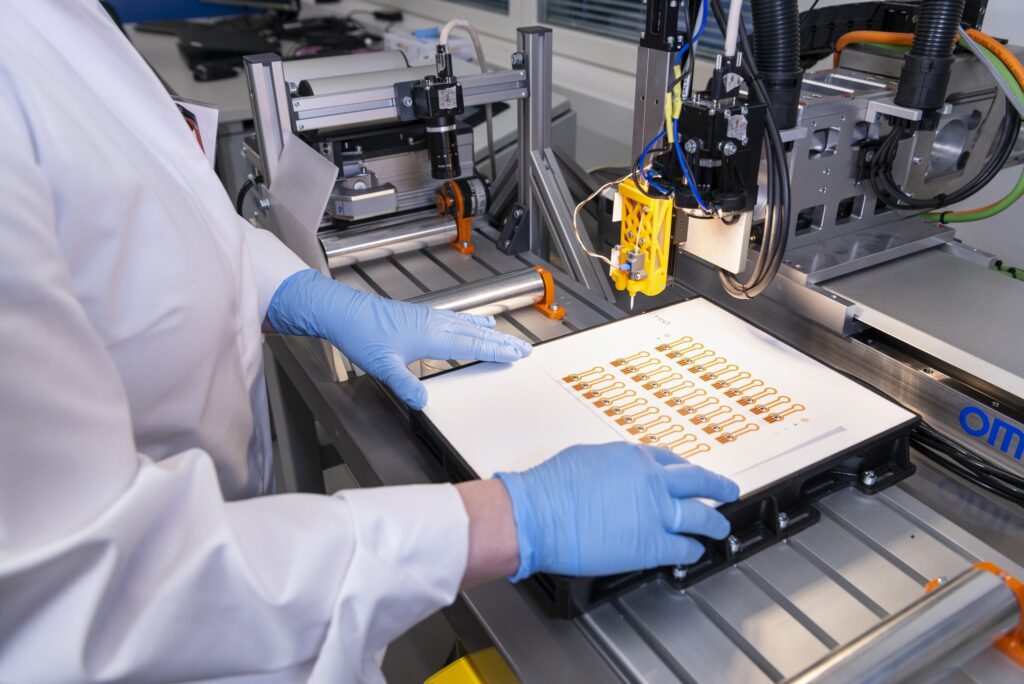
The project focuses on the development of printable hybrid electronics applications and generating new knowledge for more environmentally friendly manufacturing, user experience, and technology acceptance in electronics.

Collaboration

Oamk coordinates the project. The project involves Luleå University of Technology, Department of Computer Science, Electrical and Space Engineering.

Project priority


Innovation

Project period


Start

01.06.2023

End

30.11.2023

Lead Partner


Oulu University of Applied Sciences


Go to website

Project info


Objective

1.1 Developing and enhancing research and innovation capacities and the uptake of advanced technologies


Total Budget

37.253,71 EUR


NPA Co-Financing

24.214,91 EUR

Sign up to our newsletter

With the newest calls and events from our newsletter